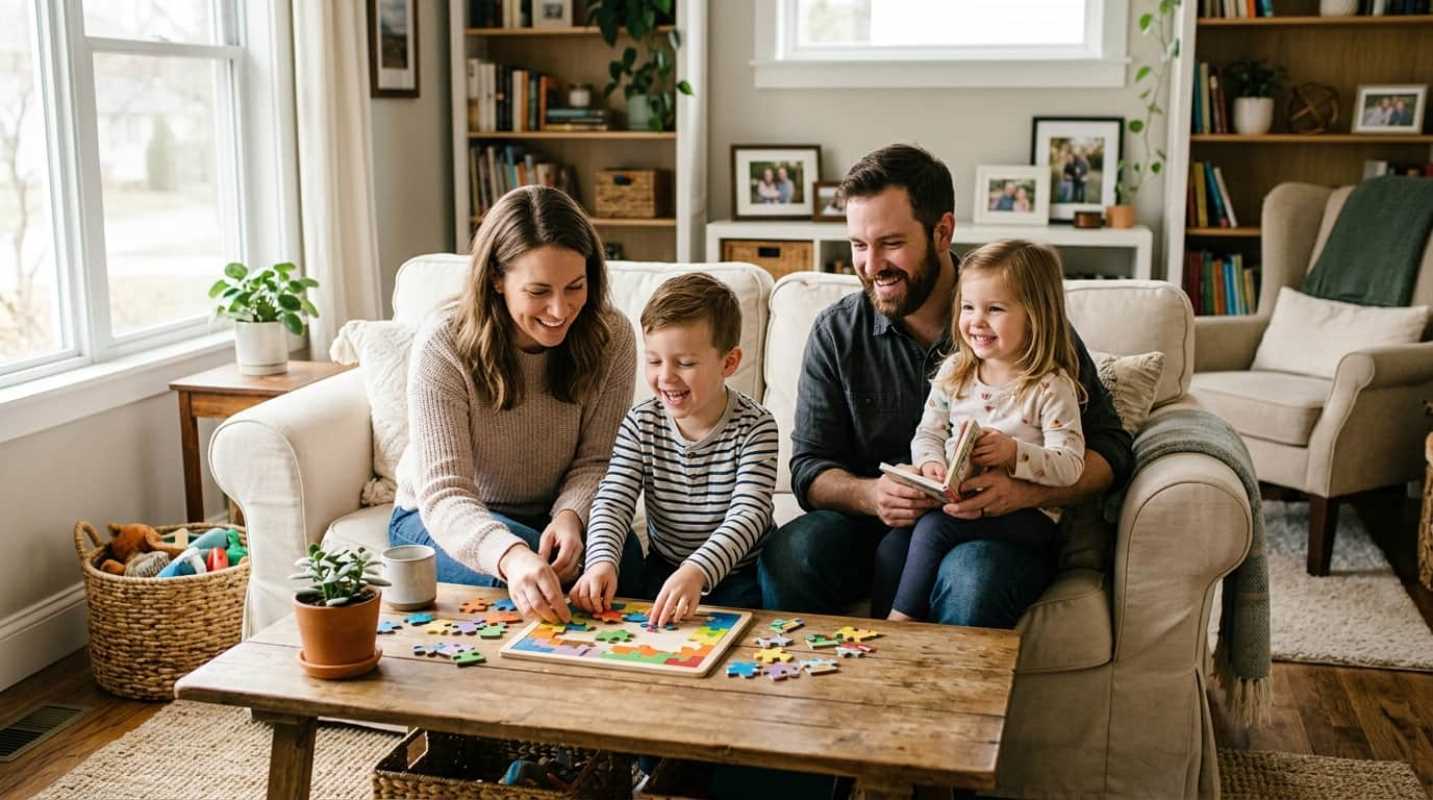
As a parent, you think a lot about the future you want for your children. You hope they will be kind, responsible, and resilient individuals. We often believe that teaching these big life lessons requires grand gestures or formal lectures. The truth is much simpler and more powerful. Your core values are not passed down in a single conversation but are woven into the fabric of your daily life. Every small interaction, from sharing a snack to resolving a sibling squabble, is a chance to model what you believe in. We will explore how you can intentionally use these everyday moments to transmit your most important values and help your children build a strong moral compass.
The Power of Modeling in Daily Life
Children are natural observers. They learn how to navigate the world by watching you. Your actions consistently speak louder than your words. This process, known as modeling, is the most effective way to transmit values. A child who sees you treat a service worker with respect learns more about kindness than they would from a lecture on being polite. Your daily behavior provides a living blueprint for how to interact with the world.
Think of yourself as a narrator of your own actions. You can make your modeling even more powerful by verbalizing your thought process. This practice is called "thinking out loud." For example, after finding a wallet on the ground, you might say, "Someone must be so worried they lost this. We should take it to the store's customer service desk so they can get it back." This connects your action (turning in the wallet) to the underlying value (honesty and empathy). You are not just showing them what to do; you are showing them why you are doing it. These moments happen all the time, offering endless opportunities to make your values visible and understandable.
Teaching Kindness and Empathy
Kindness and empathy are the foundations of strong relationships and a compassionate society. These values are not abstract concepts. They are skills that can be practiced and strengthened through daily interactions. You can help your child develop these qualities by highlighting the feelings of others and encouraging small acts of care.
Acknowledging Feelings
Empathy begins with the ability to recognize and name emotions in oneself and others. You can foster this skill by being an "emotion coach." When your child is upset, help them label their feelings. You could say, "You seem really frustrated that your tower fell down." This validates their experience.
Extend this practice to the people around you. In a storybook, you might ask, "How do you think that character felt when their friend moved away?" At the park, you might observe, "That little boy fell down. He looks sad. I bet he could use some help." These small prompts encourage your child to look beyond their own world and consider the perspectives of others.
Encouraging Acts of Service
Kindness is empathy in action. Look for simple opportunities for your child to help. This could be as easy as asking them to help you carry in the groceries or to make a get-well card for a sick grandparent. The goal is to make helping a normal and rewarding part of family life.
Frame these tasks not as chores, but as ways to care for each other. You could say, "Let's set the table together so we can all enjoy dinner sooner." This language fosters a sense of teamwork and shared responsibility. It teaches that our actions have a positive impact on the people around us.
Cultivating Responsibility and Accountability
Responsibility is about understanding that our choices have consequences and that we are accountable for our actions. Teaching this value helps children become reliable and trustworthy individuals. Everyday household life is the perfect training ground for learning responsibility.
The Importance of Contributions
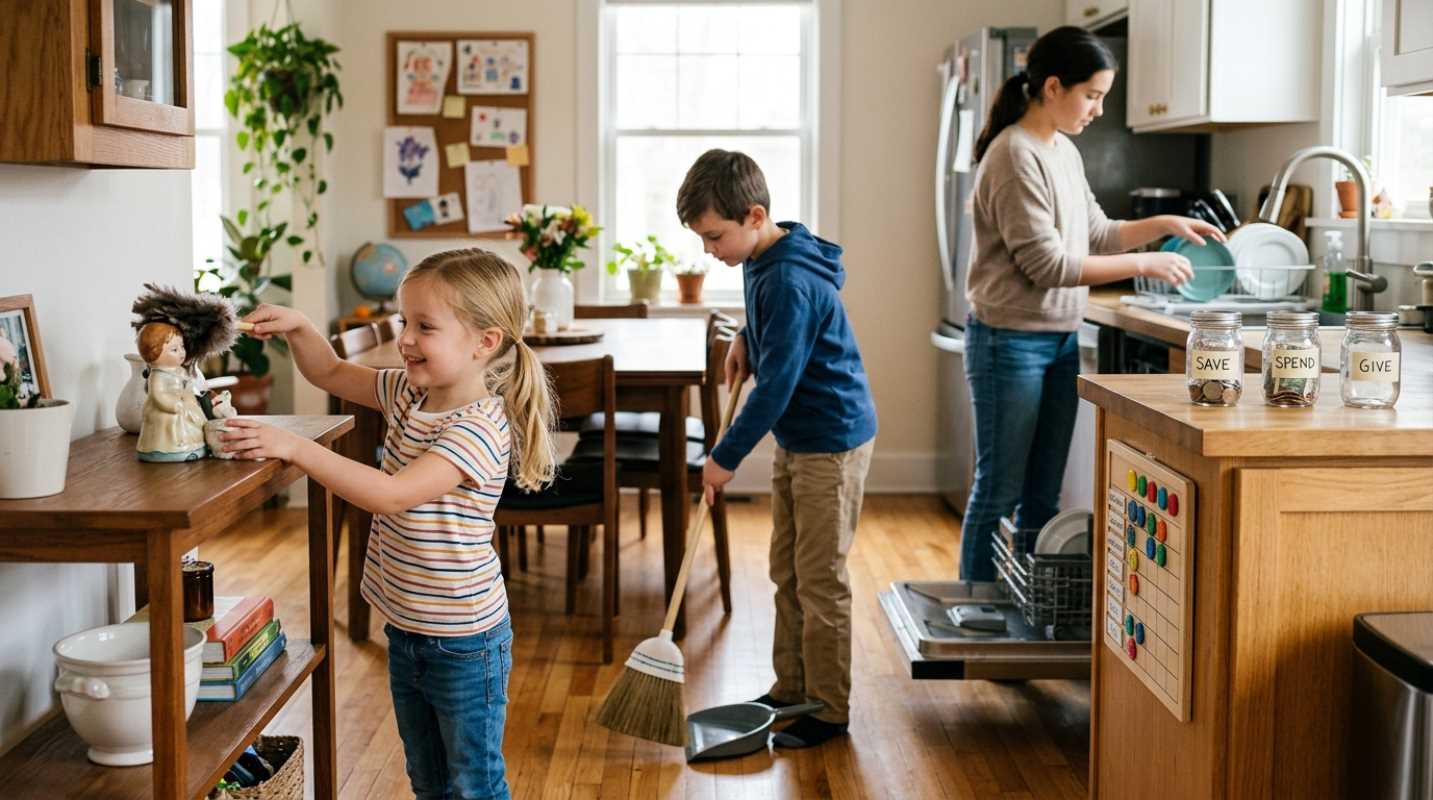
Give your child age-appropriate tasks that contribute to the family's well-being. A young child can be responsible for putting their toys away. An older child can be in charge of feeding the family pet or helping with meal preparation. These are not just chores; they are their contribution to the household team.
Completing these tasks gives children a sense of competence and belonging. It shows them that their efforts matter. Resist the urge to redo their work to a "perfect" standard. A slightly lumpy bed made by a proud child is better than a perfectly smooth one they had no part in. The lesson is in the effort and follow-through, not in flawless execution.
Owning Mistakes
Everyone makes mistakes. How you handle them is a powerful lesson in accountability. When your child accidentally spills milk, your reaction matters. A calm response that focuses on the solution ("Oops, let's get a towel and clean that up together") teaches them that mistakes are manageable. It prevents them from feeling shame, which can lead to hiding errors in the future.
Model this yourself. If you forget a promise or lose your patience, own it. You can say, "I'm sorry I raised my voice earlier. I was feeling stressed, but it wasn't fair to you. I'll try to handle my feelings better next time." This shows your child that apologizing and taking responsibility for your actions is a sign of strength, not weakness.
Building Resilience and a Growth Mindset
Resilience is the ability to bounce back from challenges and setbacks. It is a crucial skill for navigating life's inevitable ups and downs. You can nurture resilience by helping your child develop a "growth mindset"—the belief that abilities can be developed through dedication and hard work.
Praising Effort Over Outcome
The way you praise your child has a profound impact on their mindset. Focusing praise on their effort rather than their innate talent encourages resilience. Instead of saying, "You're so smart for getting an A," try saying, "You worked so hard studying for that test, and your effort really paid off."
This small shift in language teaches them to value persistence. It helps them understand that challenges are not a sign of failure but an opportunity to learn and grow. When they face a difficult task, they are more likely to persevere because they believe their effort is what matters most.
Normalizing Setbacks
Shielding your child from all disappointment does them a disservice. Experiencing small, manageable setbacks helps them build the emotional muscle needed to handle bigger challenges later. Allow them to lose a board game without bending the rules. Let them experience the natural consequence of forgetting their homework.
Your role is to support them through the disappointment, not to prevent it. You can say, "I know you're disappointed you didn't win the game. It's okay to feel that way. You played really well, and we can try again tomorrow." This teaches them that it is possible to feel sad or frustrated and still be okay. It builds their confidence in their ability to handle difficult emotions.