If you are currently staring at a mountain of college brochures, feeling your head spin, you are not alone. The college search process can feel like a high-stakes game of matching your future with a price tag and a campus culture. It is easy to get overwhelmed by the endless options and conflicting advice.
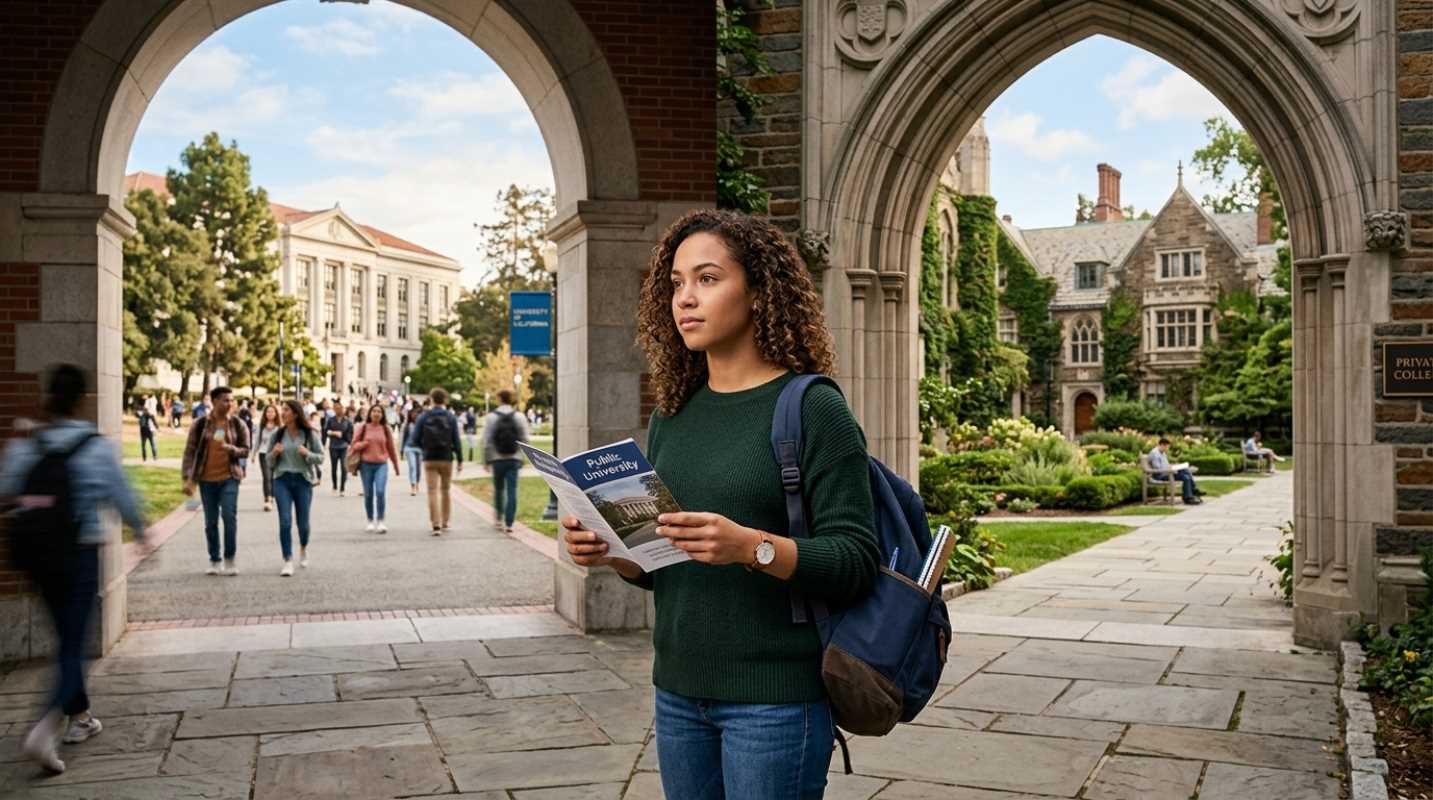
At its heart, the choice often boils down to a fundamental fork in the road: public versus private. The core difference lies in how these schools get their money.¹ Public universities rely on state governments and taxpayers to keep things running. Private universities, on the other hand, operate independently, funding themselves through tuition, private endowments, and alumni donations.
But how does that funding model actually change your day-to-day experience as a student? To make the right choice, you need to look past the marketing gloss and focus on what matters to your wallet, your career, and your sanity.
Analyzing University Cost Comparison Beyond the Sticker Price
Let us talk about the elephant in the room: cost. When you look at the published tuition rates, it is easy to experience some serious sticker shock.
For the 2025–2026 academic year, the average published tuition and fees tell a very clear story:³
• Public In-State Tuition: $11,950 per year
• Public Out-of-State Tuition: $31,880 per year
• Private Nonprofit Tuition: $45,000 per year
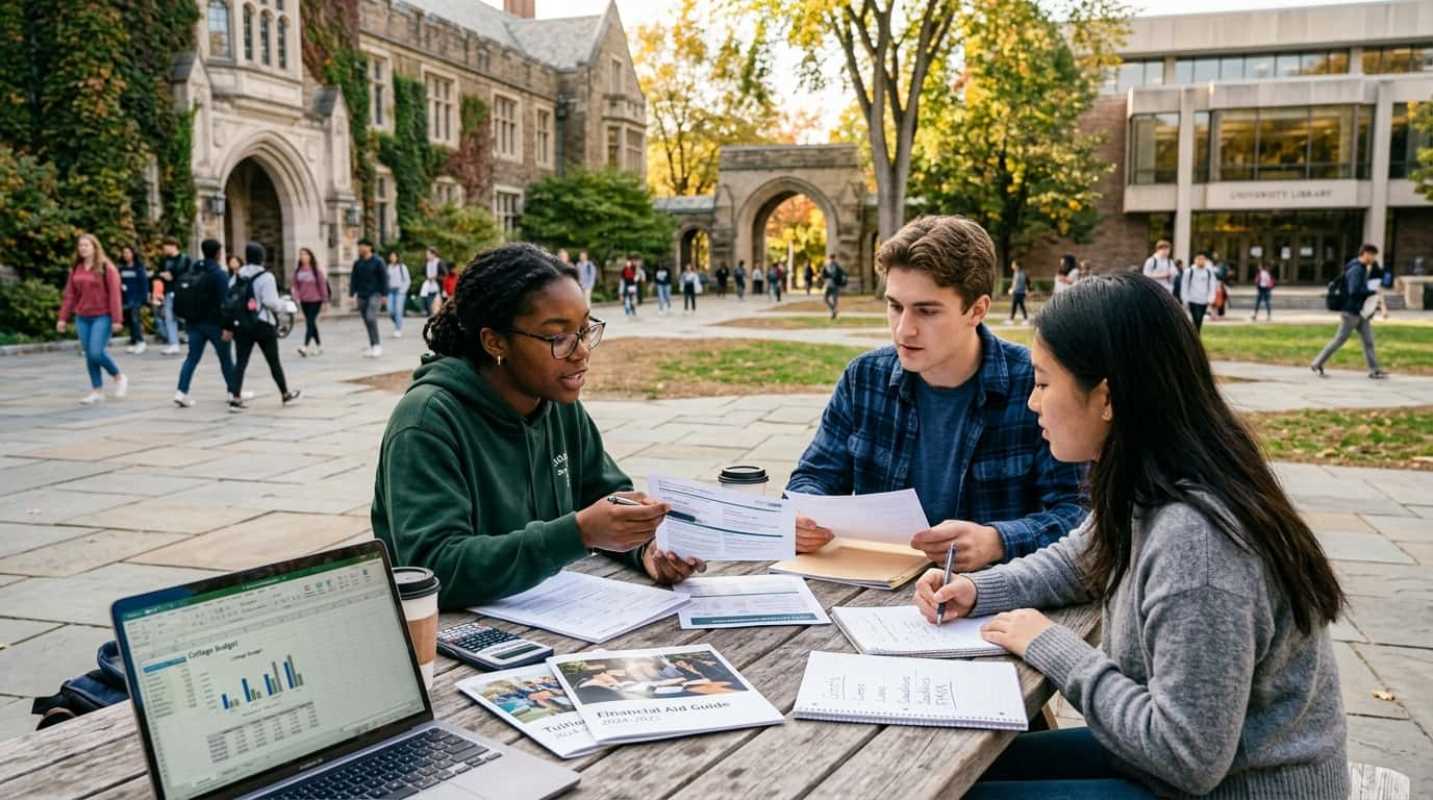
If you add room, board, books, and living expenses, the total cost of attendance jumps to about $30,000 a year for in-state public schools and $63,000 a year for private colleges. But here is the secret: almost nobody pays that published price.
The number you actually need to care about is the net price, which is what you pay after grants and scholarships are factored in. Because private universities often have massive endowments, they can offer incredibly generous institutional financial aid. In fact, about 91% of students at private colleges receive aid, compared to 85% at public universities.¹
For the 2025–2026 school year, the average net tuition for an in-state public university student is only about $2,300. For a private nonprofit university, that net tuition drops to an average of $16,910.³ That is a massive discount from the advertised price. This is why you should never cross a private school off your list just because of the initial price tag.
Campus Culture and the Question of Size
Have you ever walked onto a campus and immediately felt either swallowed whole or perfectly at home? That feeling usually comes down to scale. Think of it like choosing between a bustling, fast-paced city and a tight-knit, quiet suburb.
Public universities are often massive, bustling cities within themselves. They offer an electric energy, packed stadiums, and hundreds of student clubs. If you love the idea of meeting new people every single day and do not mind walking through a crowd to get to class, this environment can be incredibly exciting.
Private colleges tend to offer a much more intimate setting. Class sizes are typically smaller, which means you cannot easily hide in the back of the room. At a school like Princeton, the student-to-faculty ratio is a tight 5 to 1.² That means your professors will actually know your name, your interests, and when you are struggling with an assignment.
This difference in size shapes how you build your network. In a smaller community, you might form deeper, more immediate connections with faculty members who can recommend you for jobs. In a larger public university, you have to be a bit more proactive to stand out, but you gain access to a massive, highly diverse student body.
Academic Opportunities and Resource Allocation
Your academic experience will look very different depending on where you land. Large public universities are research powerhouses. Because they receive state and federal funding, they often boast state-of-the-art laboratory equipment, massive libraries, and a dizzying array of majors. If you want a highly specific, niche major, a large public university is more likely to offer it.
The trade-off is that those resources are shared among tens of thousands of students. You might find yourself in an introductory chemistry lecture with 400 other people, where the class is taught by a teaching assistant rather than the professor. You also have to handle some administrative red tape to get the classes and housing you need.
Private universities tend to focus their resources on undergraduate teaching and mentorship. You get direct access to professors who are leaders in their fields, often working alongside them on research projects that would be reserved for graduate students at a larger public school. This personalized support pays off in graduation rates. About 76% of students at private nonprofit universities graduate within six years, compared to 71% at public universities.⁴
Key College Choice Factors to Prioritize
How do you actually make the call? It helps to sit down and rank your personal priorities. Here is a quick checklist to help you weigh your options
• Location and local impact: Public state universities have incredibly deep regional networks. If you plan to live and work in the state where you go to school, that public degree carries immense local weight.
• Alumni network reach: Selective private colleges often have national or even global alumni networks. If you want to move across the country or work internationally after graduation, a private school network can open doors far away.
• Your learning style: Be honest with yourself about how you learn best. Do you need the accountability of a small seminar, or do you thrive on the independence of a large lecture hall?
• Career services and placement: Look at the job placement rates and the types of companies that recruit on campus. Ask the admissions offices how they help students secure internships.
To help you make this big decision, we have gathered some of the best tools and resources to guide your college search process.
Trust Your Gut and Your Math
At the end of the day, remember that both paths lead to successful outcomes. The data shows that having a bachelor's degree is a massive financial win regardless of where you go. Recent graduates aged 22 to 27 earn a median salary of $60,000, compared to just $36,000 for those with only a high school diploma. Over a lifetime, that degree translates to an extra 1.2 million dollars in earnings.
You might hear that private school graduates earn slightly more money after graduation, but economists have found that this is mostly due to selection bias. When you control for student backgrounds and test scores, the wage gap between public and private graduates disappears. Highly motivated students succeed no matter where they go.
So, do not let the sticker prices scare you off early in the game. Apply to a mix of public and private schools, wait for the financial aid award letters to arrive, and compare the real numbers. Once the math is clear, visit the campuses one last time, trust your instincts, and take ownership of your educational journey.
Sources:
1. Public vs. Private Colleges: What’s the Difference?
https://collegewise.com/blog/private-vs.-public-colleges-differences
2. Private vs. Public College: What’s the Difference?
https://www.sofi.com/learn/content/private-vs-public-college/
3. Trends in College Pricing and Student Aid
https://research.collegeboard.org/trends/college-pricing/highlights
4. College Graduation Rates
https://www.bestcolleges.com/research/college-graduation-rates/
*This article on GoodWilliam is for informational and educational purposes only. Readers are encouraged to consult qualified professionals and verify details with official sources before making decisions. This content does not constitute professional advice.*