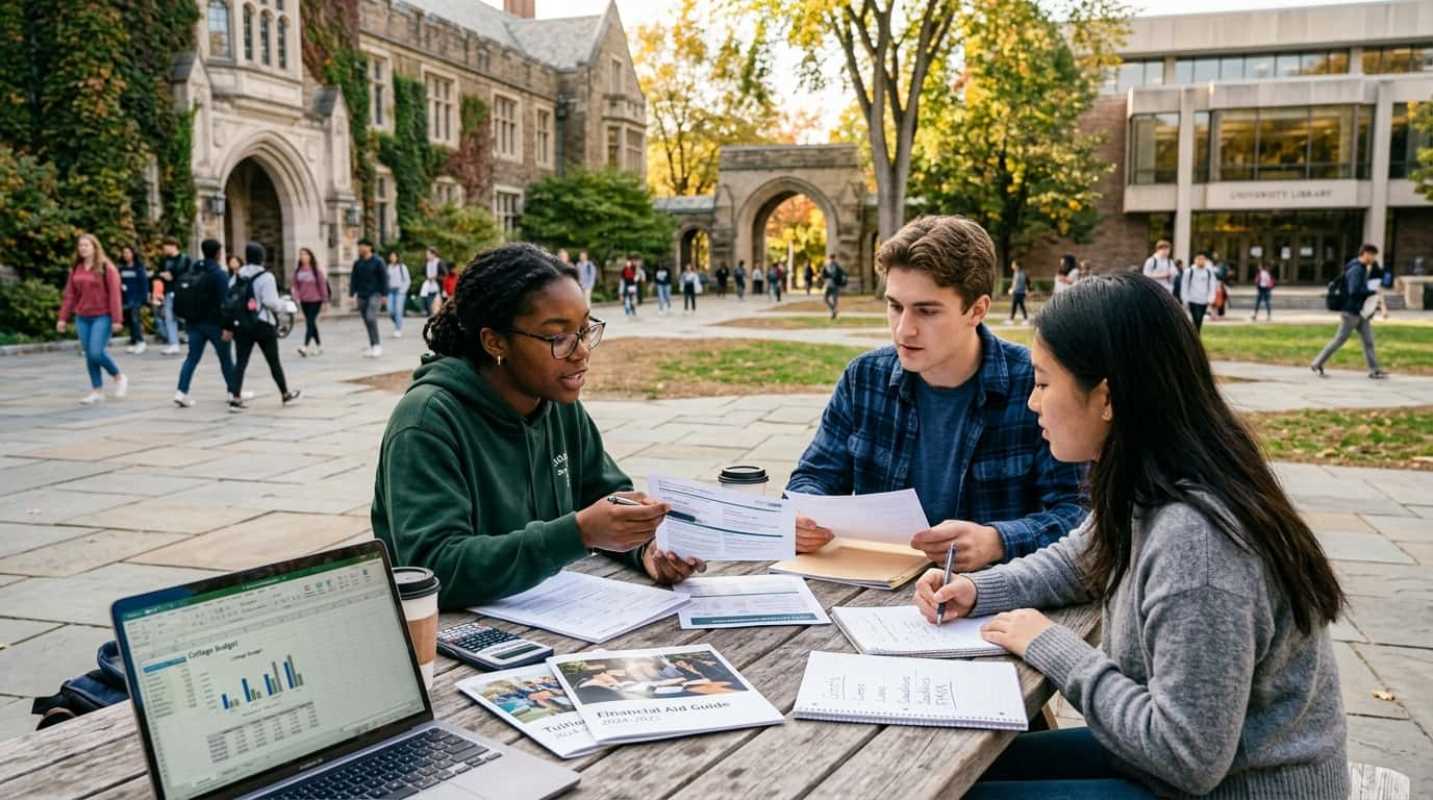
You spent all night in the library, aced your exams, and secured a stellar GPA. But when you step into the job market in 2026, you'll quickly realize that your transcript's only half the story. The reality of the entry-level job market is tougher than it has been in years. According to the Cengage Group 2025 Graduate Employability Report, recent graduates are stepping into the tightest entry-level market in half a decade.¹ Only 30% of those grads found jobs in their fields, and nearly half reported feeling totally unprepared to apply.¹
So what's the missing piece? It's what we can call extracurricular intelligence. Although your classes teach you the theory, the real world demands practical, everyday execution. The good news is that you can build these high-value skills completely outside the lecture hall.
Mastering the Art of Professional Networking
We've all heard that networking is important, but the word itself probably makes you cringe. You might picture awkward career fairs where you hand a flimsy piece of paper to a recruiter who looks like they'd rather be anywhere else.
True professional networking means building organic, authentic relationships with peers and mentors rather than collecting business cards or spamming people on LinkedIn. Think of it as finding your professional community.
Campus events, guest lectures, and alumni panels are the perfect low-pressure environments to start. Instead of asking for a job right away, try asking for advice. People love to talk about their own journeys. Ask them what they wish they'd known at your age, and then actually listen to their answers.
Post-pandemic social shifts have made these face-to-face interactions harder for many young professionals. Clinical psychology professor Linda Lin notes that students today must develop networking and interpersonal skills with far greater intentionality. Daily life doesn't always force these organic interactions anymore, so you have to seek them out.
Harnessing Leadership Experience Through Student Orgs
Joining a student club is easy, but taking the lead is where the real growth happens. There's a massive difference between showing up for free pizza and actually running the organization.
When you take on a leadership role, you get a crash course in human psychology. You'll learn how to manage projects, run meetings that don't waste everyone's time, and handle the inevitable conflicts that pop up when people disagree. These are the soft skills that employers desperately crave.
There's a huge perception gap here. Employers report a massive disconnect, often exceeding 30%, between how highly students rate their own leadership skills and what employers actually see in the workplace.² Why does this gap exist? It's because students often equate leadership with a title rather than a behavior.
To stand out, you need to frame your leadership experience on your resume through actions and results. Don't just write that you were the vice president of a club. Instead, use bullet points that tell a story.
• Action: Identified a 1,200 dollar budget deficit, organized a campus-wide fundraiser, and cleared the shortfall in two weeks.
• Initiative: Redesigned the club communication approach to move 50 members from chaotic group chats to a structured digital workspace.
• Resolution: Managed a major disagreement between committee members regarding event planning, keeping the project on schedule.
Internships: Your Bridge to the Career World
Think of an internship as a low-risk trial run for your future career. It's the absolute best way to see if you actually enjoy the daily reality of your chosen field.
According to the National Association of Colleges and Employers, having an internship is the single biggest deciding factor when employers choose between two equal candidates.² In fact, over 83% of recent graduates say their internship was key to their career prep.³ It's where you learn how office politics work, how to write an email that doesn't ramble, and how to present ideas without burying the point.
The catch is that finding a traditional internship has become incredibly competitive. Handshake data showed that internship listings fell by 15% over a recent two-year period while student applications doubled.
If you can't land a traditional summer internship, don't panic. Look for short-term, project-based experiences often called externships or micro-internships. These allow you to complete real work for real companies, giving you concrete portfolio pieces to show off in interviews.
Developing Financial Literacy and Life Skills
No syllabus is going to teach you how to manage your life once the structured college bubble pops. One of the most important things you can do during these years is build personal habits that support your independence.
Start with your money. Learning how to budget, track your spending, and understand credit while your stakes are relatively low will save you years of financial stress later. If you don't learn to manage 100 dollars now, you'll struggle to manage 5,000 dollars a month when you start working.
Then there's time management. In college, your life is dictated by assignment deadlines and class schedules. In the professional world, you often have to set your own pace. Developing self-discipline outside of class, like setting consistent sleep schedules or prioritizing tasks without a professor reminding you, is needed.
Understanding the Hybrid and AI Era
The modern workplace has changed dramatically. Hybrid work is no longer a temporary experiment. It's a permanent fixture of corporate life. In fact, hybrid roles now make up 45% of all new hires and 48% of entry-level positions.²
This means you need to prove you can work effectively without someone looking over your shoulder. You can build this digital fluency right now. When you work on group projects or manage student clubs, try using professional digital tools like Slack, Figma, or Mural.
AI readiness is another massive trend. About 82% of students rate digital fluency as key, and 70% are taking active steps outside their classes to learn generative AI tools. Practice using these tools for brainstorming, organizing research, or drafting outlines. Showing that you know how to work alongside technology is a massive selling point.
Building Your Competitive Edge
At the end of the day, a college degree is simply a baseline. Although 71% of employers still require a degree for entry-level positions, they're looking at your actual skills when deciding who to hire.¹ The degree gets you to the starting line, but your extracurricular growth is what carries you across the finish line.
Don't treat your college years as a passive waiting room for your career. Treat every club meeting, project conflict, and budget challenge as a real-world classroom.
The students who stand out in today's job market are the ones who realize learning doesn't stop when the lecture ends. By taking initiative, building real relationships, and practicing active problem-solving, you'll build a toolkit that no textbook can ever provide.
Sources:
1. Forbes: New Report: As Skills Gap Grows, Job Market For College Grads At 5-Year Low
https://www.forbes.com/sites/michaeltnietzel/2025/09/10/new-report-as-skills-gap-grows-job-market-for-college-grads-at-5-year-low/
2. NACE: Job Outlook 2024
https://www.naceweb.org/docs/default-source/default-document-library/2023/publication/research-report/2024-nace-job-outlook.pdf
3. NSLS: The State of Higher Ed 2025
https://www.nsls.org/blog/the-state-of-higher-ed-2025
*This article on goodwilliam.com is for informational and educational purposes only. Readers are encouraged to consult qualified professionals and verify details with official sources before making decisions. This content does not constitute professional advice.*