Ask anyone where to dive in Australia, and you know what they'll say: head straight to Cairns and book a boat out to the Great Barrier Reef. That famous stretch of water gets all the spotlight, and fair enough, it's massive. But Australia has over 34,000 kilometers of coastline. If you only stick to the standard tourist track on the east coast, you're missing out on some of the most untouched underwater environments on the planet.
What if you could swim alongside massive ocean creatures without dodging a dozen other tour boats? What if you could step straight off a sandy beach into a world-class fringing reef? Australia's lesser-known marine parks and offshore atolls offer clear waters, teeming wildlife, and quiet dive sites where you feel like you have the whole ocean to yourself.¹
Why Look Beyond the Great Barrier Reef
Stepping away from the primary tourist hubs gives you a completely different perspective on Australian marine life. You trade crowded dive decks and fixed pontoon platforms for intimate animal encounters and pristine coral formations.
The coastline features an astounding variety of habitats. You can explore tropical fringing reefs, deep granite caves, temperate kelp forests, and isolated oceanic sea stacks. Each region offers distinct marine ecosystems that feel raw and unscripted.
Whether you're a casual snorkeler looking for shallow reef walks or an experienced diver seeking deep wall drifts, going off the beaten path pays off big time. You get better visibility, healthier corals, and stories very few other travelers can tell.
Ningaloo Reef and the Western Edge
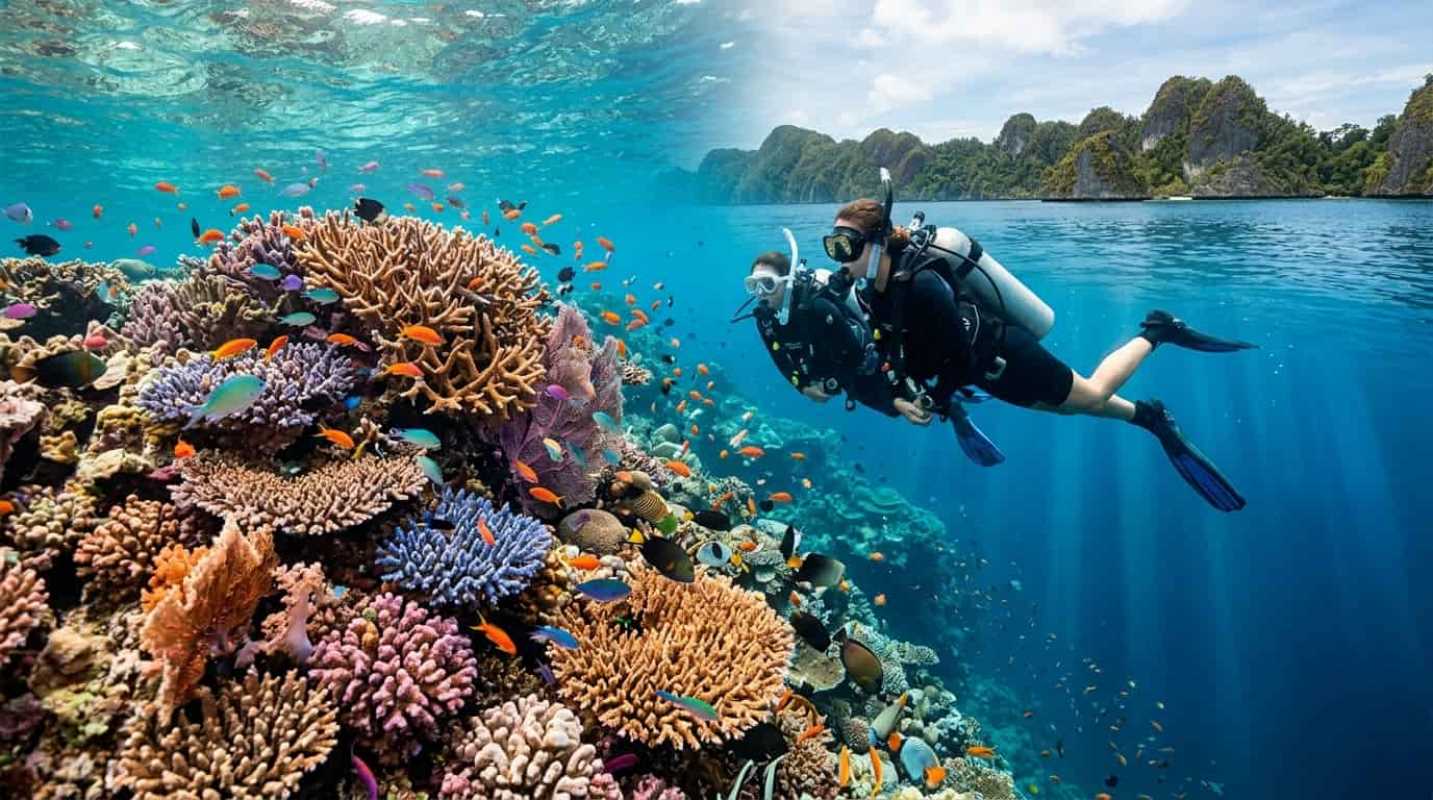
Over on the west coast, Ningaloo Reef stretches for 260 kilometers along the Ningaloo Coast. It's Australia's largest fringing reef, and its biggest perk is sheer convenience. In places like Turquoise Bay or Coral Bay, you don't need an expensive two-hour boat ride to see cool stuff. You just kick off the sand with your mask and fins, and within seconds you're hovering above healthy coral gardens.
The real draw at Ningaloo comes in the form of ocean giants. If you time your trip right, you can swim right alongside whale sharks, the gentle giants of the deep. They arrive reliably every year between March and July. Shortly after, humpback whales pass through from August to October. If you miss those windows, don't worry. Manta rays and sea turtles hang around all year.
For scuba divers, the outer reef walls and the Exmouth Navy Pier offer unbelievable encounters. The Navy Pier is regularly ranked among the top ten jetty dives globally. Because it sits on a restricted military site, you have to book with a licensed operator, but the density of marine life packed around those metal pilings is staggering.
Remote Ocean Expeditions and Atolls
If you want true off-the-grid adventure, you have to look farther offshore. About 300 kilometers off the coast of Broome sit the Rowley Shoals. This group of three pristine coral atolls rises up from ocean depths of more than 400 meters. Visibilities here regularly clear 30 to 40 meters, making the water look like liquid glass.²
Fewer than 400 divers get to visit the Rowley Shoals each year because you can only get there on extended liveaboard trips during a short window between September and December. The dive sites feature steep vertical drop-offs, massive potato cod, and exhilarating drift dives through natural ocean channels. It feels like stepping back in time to an ocean completely untouched by modern civilization.³
Further south along the east coast, you'll find other remote gems like Fish Rock Cave near South West Rocks. It features Australia's only true 125-meter ocean cave running straight through a granite island. Inside, a resident group of endangered Grey Nurse Sharks glides through the dark, giving certified divers a thrilling overhead cave experience.
Needed Preparation and Certification Needs
Before you pack your fins for these remote spots, take a close look at your dive log. Swimming off a calm beach in Queensland is very different from managing heavy ocean surges or deep currents off an isolated offshore sea stack.
Different sites demand very different skill levels:
• Shallow Bays and Lagoons: Open Water certification or basic snorkeling skills work great for Ningaloo's inner lagoon and South Australia's cuttlefish runs.
• Deep Caves and Tunnels: Sites like Fish Rock Cave require strong buoyancy control and comfort in overhead environments. Dive guides often evaluate your skills on an exterior swim before letting you enter the deep 24-meter cavern opening.
• Offshore Sea Stacks and Atolls: Spots like Ball's Pyramid off Lord Howe Island or the outer channels of Rowley Shoals feature strong currents and open-blue water ascents. Advanced Open Water (AOW) certification and at least 20 logged dives are standard entry requirements here.
If you've only done basic recreational dives, consider completing your Advanced Open Water course or taking a drift diving specialty before heading out on a liveaboard trip. It keeps you safe and makes sure you can enjoy the dive without feeling overwhelmed by the conditions.
Conservation and Responsible Underwater Tourism
Exploring beyond the main tourist hubs does more than just give you better photos. It helps take the heat off heavily visited marine areas. When tourist numbers spread out across different regions, local ecosystems get a chance to breathe and recover from heavy daily boat traffic.
Visiting remote marine environments comes with extra responsibility. You are entering delicate spaces that don't see human activity every day. Keeping these places special requires careful habits.
• Master your buoyancy: Keep your fins well clear of fragile corals and avoid stirring up silt on dark cave floors.
• Choose reef-safe sunscreens: Standard chemical sunscreens leach harmful compounds into shallow lagoon waters. Use mineral-based sun protection instead.
• Participate in citizen science: Some regional dive operators now offer specialized courses, like giant kelp restoration in Tasmania, where you can help plant and monitor dwindling underwater kelp forests.
Treat every dive site as a sanctuary. Leave nothing behind, take only memories, and support local operators who actively invest in marine conservation efforts.
Start Planning Your Next Underwater Adventure
Australia's waters hold far more than just one famous reef system. From swimming alongside gentle whale sharks off the western coast to drifting through deep ocean channels in the Timor Sea, stepping away from the crowds reveals an underwater world that feels wild and undiscovered.
The best marine encounters happen where tourist numbers stay low, and marine life stays abundant. Take a look at your current dive experience, choose a region that matches your sense of adventure, and start mapping out your itinerary. An unforgettable underwater journey is waiting for you just beyond the usual tourist map.
Sources:
1. PADI Hidden Dive Sites in Australia
https://blog.padi.com/hidden-dive-sites-in-australia/
2. Bluewater Dive Travel Australia Guide
https://www.bluewaterdivetravel.com/destination/australia-diving
3. Diving Australia's Hidden Gem Rowley Shoals
https://scubadiverlife.com/diving-australias-hidden-gem-rowley-shoals/