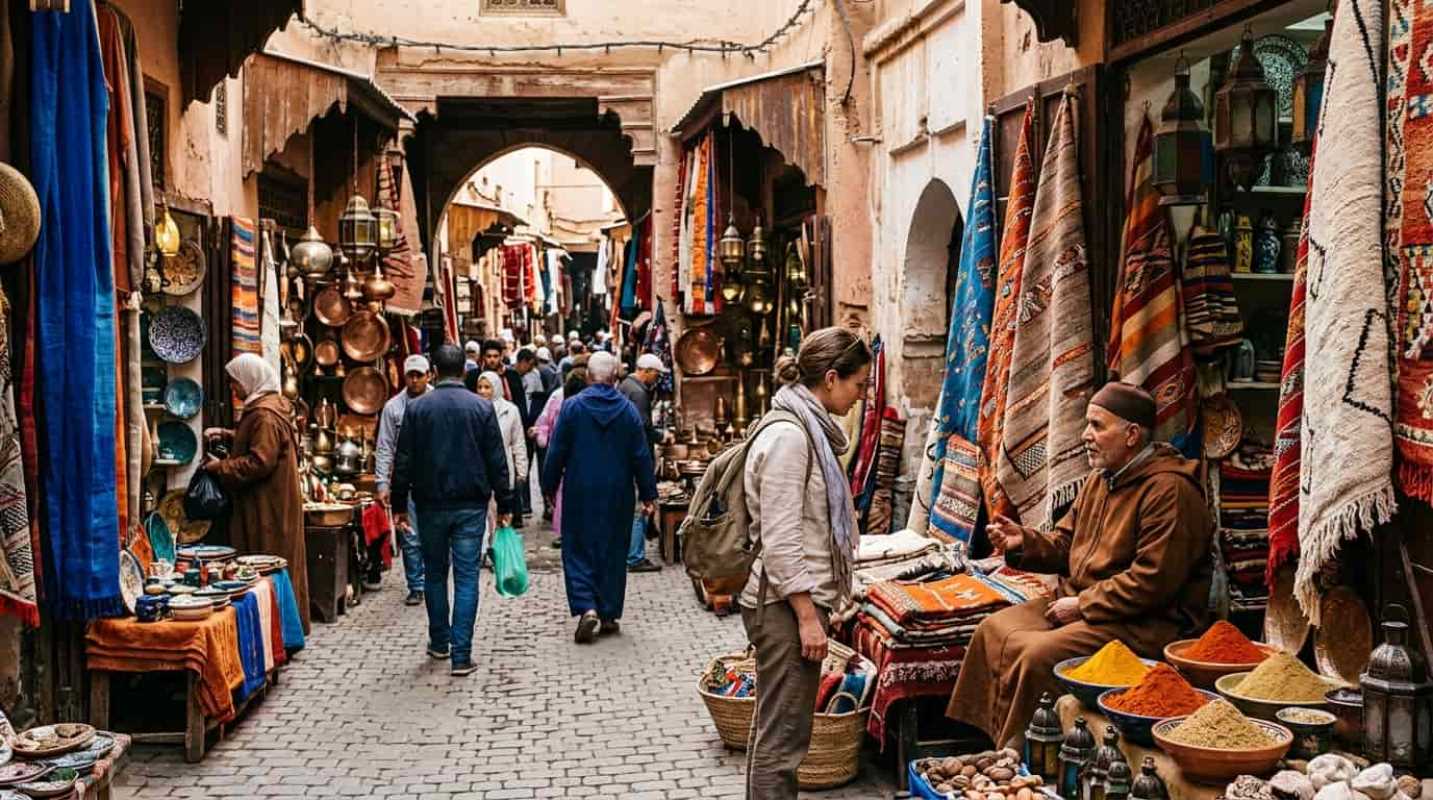
Have you ever stepped into a space where time seems to fold in on itself? The moment you pass through the heavy stone gates of a Moroccan medina, the modern world vanishes. Suddenly, your senses take over. You hear the rhythmic clinking of brass hammers, smell roasted cumin and crushed mint, and see colorful silk carpets hanging from ancient plaster walls. Medinas are the historic walled cores of Morocco's oldest cities, most notably Marrakech and Fes. They are not preserved museums frozen behind glass. They are working, breathing urban networks where tens of thousands of people live, shop, pray, and work every single day.
If you are planning a trip to Morocco in 2026, understanding these historic street systems is easily one of the most rewarding parts of the journey. To enjoy it, you need to throw out your standard travel playbook and get ready for a completely immersive experience.
Architectural Wonders of the Medina
To understand why medinas feel so unique, you have to look at how they were constructed. The urban layout was designed with two goals in mind: privacy for families and defense against invaders. Streets intentionally wind and narrow, creating a maze that confuses outsiders while keeping interior homes cool under the desert sun.
Behind modest, unadorned doorways lie riads. These traditional Moroccan houses are built around central courtyard gardens, keeping family life focused inward, away from the noise of the public street. As you walk through key landmarks, you will see three signature creative details: zellige (hand-cut geometric tilework), carved cedarwood, and delicate sculpted plasterwork.
Here are the key historic sites you shouldn't miss when exploring these two famous medinas:
• Ben Youssef Madrasa (Marrakech): Founded in the 14th century and expanded in 1565 by Saadian Sultan Abdallah al-Ghalib, this former Islamic college once housed up to 900 students.² Its central courtyard features a marble reflecting pool and exquisite cedar screens.
• Koutoubia Mosque (Marrakech): Completed around 1195, its 77-meter minaret is the defining skyline feature of Marrakech and provided the design template for Seville's Giralda.
• Bahia Palace and Saadian Tombs (Marrakech): Bahia Palace shows sprawling painted wooden ceilings, while the late 16th-century Saadian Tombs display grand Italian Carrara marble columns.
• Al-Qarawiyyin University (Fes): Founded in 859 AD by Fatima al-Fihri, UNESCO recognizes this institution as the oldest continually operating university in the world.¹
• Bou Inania Madrasa (Fes): Built between 1351 and 1356 AD, it is one of the few active religious sites in Morocco open to non-Muslim visitors, featuring fine brass doors and detailed stucco work.
• Chouara Tannery (Fes): Dating back to the 11th century, these famous stone vats are used to dye animal hides using traditional natural materials like saffron, poppy, and pigeon dung.³
The Art of Bargaining and Shopping Etiquette
Shopping in a souk (market) can feel intimidating if you treat it like a simple retail transaction. In Moroccan culture, bargaining is a friendly conversation and a social ritual, not a battle. Sellers expect negotiation, and approaching it with good humor makes the whole process fun.
How do you negotiate fairly without overpaying or insulting the artisan? Follow these straightforward steps:
1. Start with a polite greeting: Always say "Salam Alaykom" (Peace be upon you) or "Bonjour" before asking about prices.
2. Let the seller name the first price: Never suggest a number first. Let the merchant set the starting anchor point.
3. Make your counteroffer: Offer roughly 30% to 50% of their initial opening price, always delivered with a warm smile.
4. Negotiate in small steps: Work your way toward a middle ground, usually landing around 50% to 60% of the original quote.
5. Use the walk-away option: If you reach your budget limit, say a polite "Shukran" (Thank you) and start walking. If the price is workable, the vendor will call you back.
6. Honor your commitment: The cardinal rule of souk ethics is simple. Only negotiate if you intend to buy. Once a vendor accepts your price, the deal is complete.
If you are looking at big-ticket items like hand-knotted Amazigh rugs or custom brass lamps, expect to be offered fresh mint tea. Accepting tea is an act of local hospitality, not an obligation to buy. It simply gives both you and the merchant time to chat and build rapport.
For items like leather goods, check the scent. Genuine leather smells earthy, never like harsh synthetic chemicals. If you want a clear baseline for prices before you start shopping, visit a government-run Ensemble Artisanal. These fixed-price centers show verified artisans and give you a clear idea of fair market value.
Mastering the Maze with Needed Navigation Tips
Fes el-Bali contains over 9,000 alleys, while Marrakech is packed with more than 18 distinct specialized souks inside 19 kilometers of historic ramparts. Getting turned around isn't just possible, it's virtually guaranteed. But getting lost is half the fun if you know how to handle it safely.
Here is how to handle the souks like an experienced traveler:
• Download offline maps: Live cellular data frequently drops inside narrow covered stone passages. Use apps like Maps.me or download offline areas in Google Maps before entering.
• Read the street signs: Pay attention to sign shapes on alley corners. Square or octagonal signs usually mark a dead end (derb), while arched or rectangular signs point toward main thoroughfares.
• Yield to fast traffic: Listen for shouts of "Balak! Balak!" (Clear the way!). Immediately step to the right side of the passage and stand close to a shop wall to let mopeds, handcarts, or donkeys pass.
• Handle unofficial guides with care: Unlicensed street guides (faux guides) may offer directions only to lead you to specific shops for a high commission. A polite but firm "La, Shukran" ("No, thank you") is usually all you need. If you're genuinely lost, ask a settled shopkeeper inside their store.
• Carry small cash bills: Market stalls run almost exclusively on cash in Moroccan Dirhams (MAD). Keep 10, 20, and 50 MAD notes ready. Handing over a 200 MAD bill for a small purchase creates unnecessary hassle.
Connecting with Local Artisans Beyond the Surface
It is easy to get caught up buying cheap souvenirs along the main tourist drags, but the true soul of the medina lives deeper in the side alleys. Seeking out real workshops lets you support sustainable tourism and keep centuries-old trade skills alive.
Look past the front displays and duck down quiet residential corridors. You will often discover tiny, dimly lit studios where leatherworkers, woodturners, and copper carvers are hard at work using tools passed down through generations. Take the time to watch their process. Always ask permission before taking photos, and offer a small tip of 5 to 10 MAD if they spend time showing you their work.
When you buy directly from the person who made the item, your money goes directly to their family and community. You take home an authentic piece with a real story, rather than a mass-produced import.
Bringing the Magic of the Medina Home
Wandering Morocco's medinas is more than just a sightseeing trip. It is a lesson in slow, intentional travel. When you step into these ancient labyrinths, you step into a living community that has maintained its traditions for over a thousand years.
As you prepare your travel plans for 2026, approach the medinas with patience, curiosity, and respect. Don't worry about sticking to a strict minute-by-minute itinerary. Allow yourself to wander, stop for tea, listen to the artisans, and let the pulse of the market guide your day. The treasures you bring home won't just be the carpets or ceramics in your luggage, but the warm human connections you made along the way.
Sources:
1. World Atlas - Fes El Bali: Unique Places Of Morocco
https://www.worldatlas.com/articles/fes-el-bali-unique-places-of-morocco.html
2. Marrakech Insiders - Ben Youssef Madrasa Guide
https://www.marrakechinsiders.com/en_us/ben-youssef-madrasa-marrakech-islamic-architecture/
3. Sahara Atlas Tours - Fes El Bali Old Medina Highlights
https://saharaatlastours.com/highlights/fes-el-bali-old-medina