Have you ever found yourself walking through the packed streets of Hoi An or jostling for position near Hanoi's Train Street and thought, "There has to be another side to this country?" You are not alone. Travelers are increasingly stepping away from crowded hot spots and heading into regional areas where life moves at a different pace. According to data from the Vietnam National Authority of Tourism, the country has built over 600 registered agricultural and rural tourism models.¹
So what does this actually mean for your next trip? It means you can trade noisy tourist buses for quiet mountain roads, family-run homestays, and meals cooked over charcoal. It is a shift toward slow travel. You get to meet people on their own terms and try hyper-local dishes that never make it to big-city menus.
Ha Giang and Cao Bang - The Majestic Northern Frontier
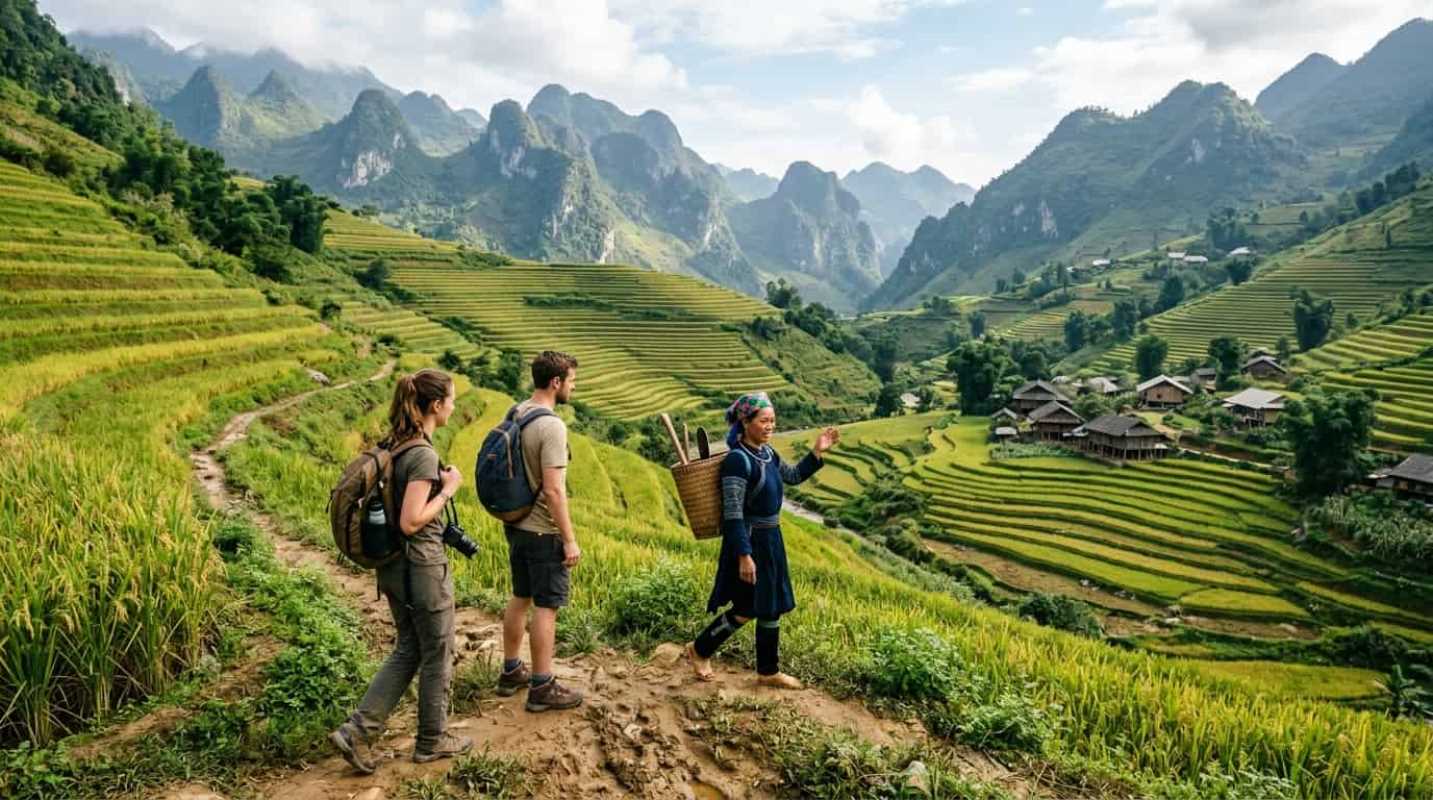
If you want dramatic scenery, head straight north to the border regions. Everyone talks about Sapa, but provinces like Cao Bằng offer breathtaking mountain views with a fraction of the crowds.
Cao Bang sits tucked away in the northeast highlands. Beyond the famous Bản Giốc Waterfall, the countryside is filled with peaceful create villages where ancient traditions thrive.
In Phia Thắp Village, Tày families continue their traditional incense-making craft in wooden stilt houses. Just down the road in Pac Rang, Nùng blacksmiths forge tools by hand using centuries-old techniques.
A bit further south in Bac Kạn province, wooden stilt villages like Pác Ngòi sit perched above rice fields near Ba Bể National Park. At night, hosts perform Then singing, a traditional musical art accompanied by a gourd-lute instrument called the Đàn Tính.
The food in these northern mountain valleys tells a story of the countryside. You will not find standard city pho here. Instead, you get to try local specialties:
• Phở chua: A cold, sour noodle dish served with roasted duck, fried taro, peanuts, and a tangy tamarind sauce.²
• Vịt quay 7 vị: Free-range duck marinated with seven native forest spices and leaves before being charcoal-roasted.³
• Bánh cuốn Cao Bang: Delicate rice rolls filled with minced pork and wood-ear mushrooms, served floating in a bowl of hot, seasoned pork bone broth instead of fish sauce.
• Cá nướng Ba Bể: Small river fish caught by hand in Bắc Kạn, marinated with fresh turmeric, and grilled over wooden skewers.
The Culinary Secrets of the Central Highlands
Heading into the Central Highlands brings you to provinces like Kon Tum and Đắk Lak. This region feels completely different from the coastal plains or northern mountains.
In Kon Tum, Indigenous communities like the Bahnar and Jarai live along winding rivers. In villages like Kon K'tu along the Đak Bla River, tall, axe-blade-shaped communal houses dominate the skyline. You can observe traditional brocade weaving and witness UNESCO-recognized Gong Culture performances.
The food here relies heavily on wild herbs, forest plants, and local agriculture. Coffee lovers will feel right at home in Đắk Hà, where thousands of hectares of Stronga coffee stretch across rolling hills. You can tour family farms, help pick coffee cherries, and taste small-batch brews on site.
When dinner arrives, get ready for flavors unique to the highlands
• Gỏi lá Kon Tum: A leaf salad featuring over 40 types of wild jungle leaves wrapped around pork belly and shrimp, dipped in a rich sauce made from fermented sticky rice.
• Cơm lam and Gà nướng lá é: Sticky rice cooked inside fresh bamboo tubes over coals, served alongside mountain-raised chicken coated in wild leaf marinades.
• Bò một nang: Sun-dried cured beef served with a sharp dipping salt made from weaver ants and forest chillies.
Sustainable Tourism - Connecting with Local Communities
Traveling off the beaten path requires a little extra thought, but the rewards are massive. When you stay in locally owned homestays, your money goes straight to the families hosting you.
Take Trà Vinh province in the Mekong Delta as a great example. On Cồn Chim, a quiet islet on the Cổ Chiên River, around 54 households practice eco-friendly natural farming. They completely avoid single-use plastics and synthetic chemical pesticides.
During the rainy season, locals grow organic rice. When the dry season brings salty water into the delta, they shift naturally to prawn and crab farming. They call this system "shrimp hugging rice trees."
Further north along the south-central coast, Phú Yên offers a similar connection to coastal traditions. Local fishermen in Ô Loan Lagoon still operate traditional round basket boats, harvesting blood cockles and practicing sustainable shellfish farming.
Top Recommendations for Regional Homestays and Tours
To make sure your trip supports local communities directly, keep these practical tips in mind:
• Choose community homestays: Stay directly with local families whenever possible to keep tourism income within the village.
• Hire village guides: Local guides know the paths, customs, and seasonal produce better than anyone else.
• Respect local etiquette: Dress modestly when visiting sacred sites, such as the historic Khmer pagodas scattered across Trà Vinh.
Tips for Your Off the Beaten Path Adventure
Getting to these remote provinces takes a bit more effort than booking an express train between Hanoi and Da Nang. Public buses run everywhere, but schedules can be flexible, and English is rarely spoken once you leave major transport hubs.
Renting a scooter or hiring a private driver is often the best way to get around rural roads. Be sure to download offline maps beforehand because cell service can drop in deep mountain valleys.
Language barriers are just part of the fun. A simple translation app on your phone, combined with smiles and hand gestures, will get you through almost any situation.
Most importantly, leave space in your schedule for unexpected stops. Whether it is an invitation to drink tea with a farmer or an unplanned detour down a coastal lane, spontaneity is where the real magic happens. So pack your bags, leave the crowded guidebooks behind, and go discover Vietnam's quiet corner provinces.
Sources:
1. Rural Tourism Strengths in Vietnam
https://vietnamnet.vn/en/rural-tourism-draws-strength-from-indigenous-culture-2536464.html
2. Cao Bang Culinary Journey
https://www.caobangloops.com/2025/06/cao-bang-food-culinary-journey-through.html
3. Discovering Cao Bang Experiences
https://vietnam.travel/things-to-do/discovering-cao-bang-7-must-do-experiences