If you're the first person in your family to step onto a college campus, you already know the feeling. It's a mix of immense pride and quiet panic. You've worked incredibly hard to get here, but once you arrive, you might realize everyone else seems to have received an instruction manual that you missed. You aren't imagining things, and you certainly aren't alone. Today, first-generation college students make up 54% of all U.S. undergraduates, which comes out to roughly 8.2 million students.¹ That's a massive community. Yet, the road to a diploma remains steep. Only 24% of first-gen students earn their bachelor's degree within six years, compared to 59% of their continuing-generation peers.¹
So why does this gap exist? It usually boils down to something sociologists call cultural capital. Higher education has its own unwritten rules, unspoken expectations, and confusing language. When your parents haven't experienced college themselves, they can offer you endless love and emotional encouragement, but they can't always help you decode a financial aid award letter or tell you how to approach a professor.
Recognizing that you need help isn't a sign that you don't belong. Asking for directions when you're in a new city isn't weakness; it's a smart approach. Seeking out college resources is proof of your ambition.
Cracking the Code and Navigating Unfamiliar Systems
College campuses operate on a hidden curriculum. This includes all the implicit norms and administrative processes that universities expect you to know automatically, even though nobody ever explicitly teaches them to you.
Have you ever looked at a course syllabus and wondered what office hours actually mean? Many first-gen students assume office hours are times when professors are busy doing administrative work and shouldn't be interrupted. In reality, those hours are reserved specifically for you to drop in, ask questions, or just chat about your goals. Some schools are even renaming them drop-in support hours to clear up the confusion.
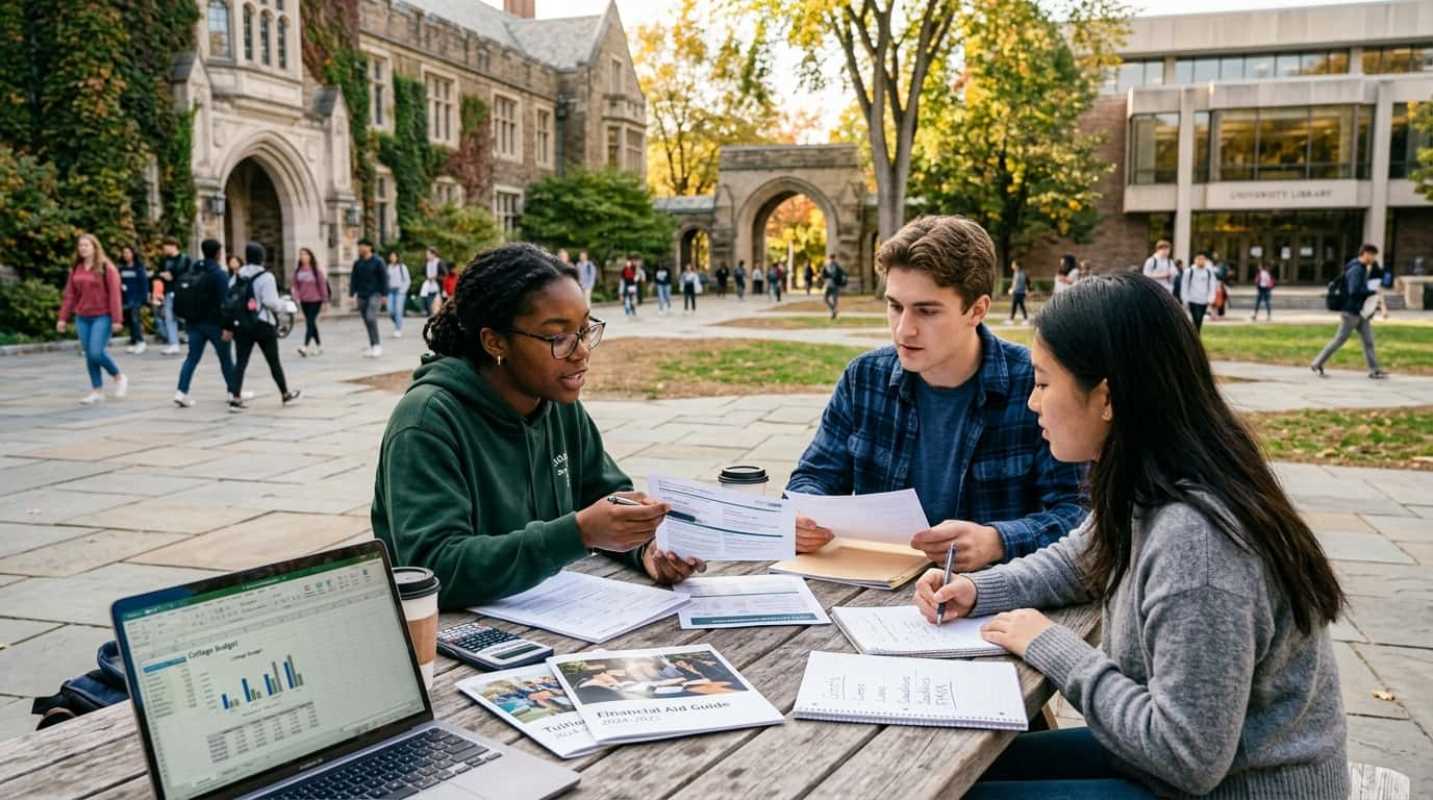
Financial jargon presents another major hurdle. Terms like FAFSA verification, drop and add deadlines, and degree audits can feel like a foreign language. Recent studies show that financial stress combined with time poverty, such as working a job while taking classes, forces many first-gen students to drop out before completing their degrees.³
To handle these systems, you have to practice self-advocacy.
• Ask early and often - Never assume a question is too basic. If an administrative form doesn't make sense, walk into the registrar or financial aid office and ask someone to walk you through it line by line.
• Talk to your professors - Introduce yourself during the first two weeks of the semester. Tell them you're a first-gen student. Most faculty members want to see you succeed and will offer extra guidance if they know you're taking the initiative.
• Master your syllabus - Treat every course syllabus like a legal contract. Mark every deadline, exam date, and professor policy on your personal calendar during the very first week of classes.
Tapping Into Campus Support Programs
One of the biggest risks for first-gen students is something researchers call post-orientation fade. National data shows that while 85.8% of first-time college students stay enrolled through their first spring semester, that number drops significantly by the start of their second year.² For lower-income and part-time first-gen students, second-year retention drops below 54%.²
To avoid hitting a wall midway through your freshman year, you need to plug into institutional support programs right away.
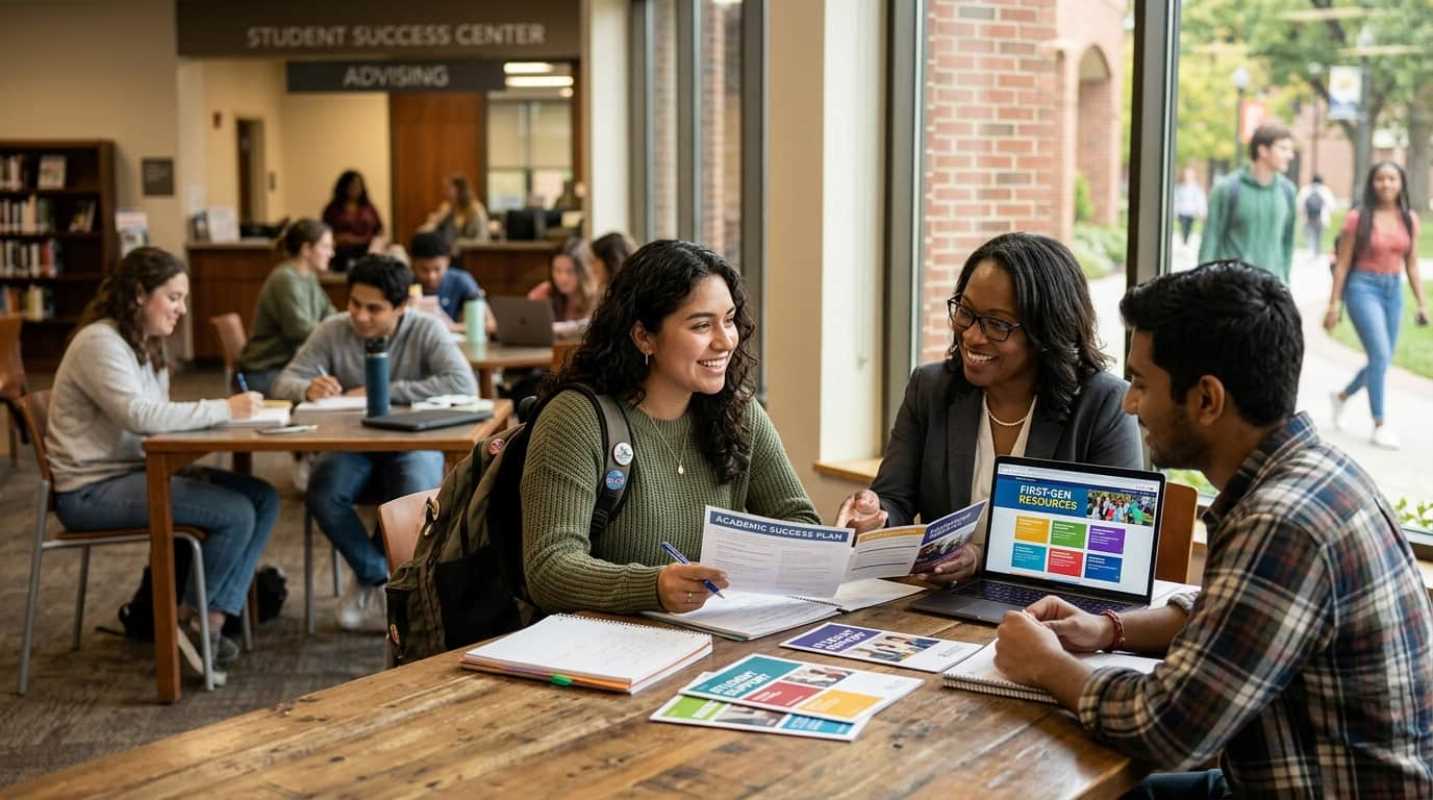
Federal TRIO Student Support Services programs operate on hundreds of campuses nationwide. They offer dedicated academic tutoring, individual personal counseling, and targeted financial literacy training. Research shows that students who participate in TRIO programs stay in school longer and graduate at higher rates than those who go it alone.
Many universities also offer emergency financial assistance or micro-grants. If an unexpected car repair or a sudden shortage of textbook funds threatens to pull you out of school, check with your dean of students' office. These small micro-grants exist specifically to cover small emergency expenses so you don't have to drop out over a few hundred dollars.
Don't wait for an academic emergency to hunt down the tutoring center or counseling services. Build your personal safety net during your first month on campus, long before midterms arrive.
The Power of Mentorship Opportunities
Finding a mentor who understands the first-gen experience can completely alter your college path. When you're feeling like an imposter in a lecture hall, having someone in your corner who says I was in your exact shoes five years ago makes all the difference.
Peer mentorship programs are particularly effective. The Kessler Scholars Collaborative, a network supporting first-gen students across the country, pairs incoming freshmen with upperclassmen. Over 85% of scholars paired with a peer mentor report a much stronger sense of belonging on campus along with higher year-to-year retention rates.
Faculty and staff matching is equally valuable. Many colleges now display first-gen stickers on office doors or list first-gen faculty in campus directories. Reaching out to a faculty mentor gives you a direct guide for academic advice, research opportunities, and career planning.
Sustained mentorship fights off feelings of isolation and boosts year-over-year student retention by up to 25%. It turns out that simply knowing you have someone to call when things get confusing is enough to keep you moving forward.
Building Your Community and Future
Imposter syndrome thrives in silence. When you keep your struggles to yourself, it's easy to assume that everyone else has it completely figured out while you're the only one drowning. Joining student organizations and first-gen affinity groups breaks that isolation.
Campus clubs tailored for first-gen students offer a safe space to share experiences, vent about stress, and celebrate wins. They also serve as powerful professional networks. Today's club president could be the alumnus who refers you for your first full-time job interview in four years.
Balancing campus life with your home life is another art form. You might feel a strange tug-of-war between the world of your family and the new academic world you're building. It's completely normal to feel guilty for being away, or to struggle when explaining your college routine to relatives who haven't experienced it. Keeping open communication lines and inviting your family to campus events helps bridge that gap.
Your decision to go to college isn't just about earning a diploma. You're altering your trajectory and building skills that will serve your family and community for generations. By actively seeking out resources, using campus support systems, and leaning into mentorship, you aren't just surviving college. You're setting yourself up to thrive long after graduation day.
Sources:
1. FirstGen Forward Insights
https://www.firstgenforward.org/our-insights
2. National Student Clearinghouse Persistence and Retention Report
https://nscresearchcenter.org/persistence-retention/
3. Trellis Approaches First-Generation College Student Research Brief
https://www.trellisapproaches.org/wp-content/uploads/2025/10/Research-Brief_TSOCT25_FirstGenStudents.pdf
*This article on GoodWilliam is for informational and educational purposes only. Readers are encouraged to consult qualified professionals and verify details with official sources before making decisions. This content does not constitute professional advice.*