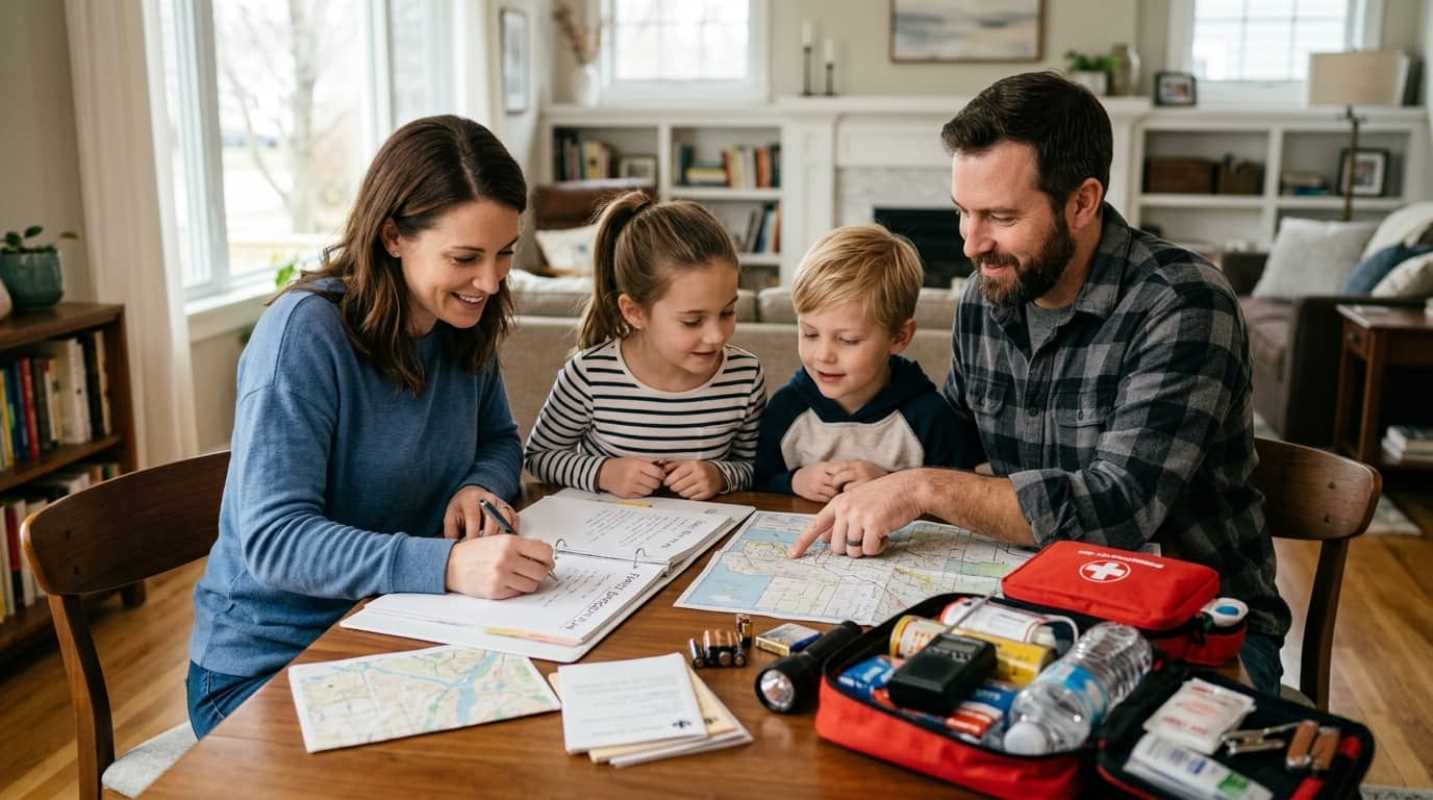
When severe weather strikes or the local power grid goes dark, how does your family respond? Most of us like to think we would handle a sudden crisis with cool, collected confidence. Yet when emergency sirens blare, panic easily takes over if you do not have a clear approach ready to go. Taking steps to prepare your household gives you real control. Knowing that your loved ones have a clear path to safety turns potential chaos into a manageable routine. Recent studies by FEMA reveal an interesting gap between how prepared people think they are and what they have actually done.
About 51% of adults report feeling prepared for a disaster, but fewer than half have actually set aside emergency supplies or formally sat down with their families to map out a written plan.¹ So why does this gap exist? Often, people feel overwhelmed by the thought of disaster planning. It feels like a massive, expensive project that takes up endless weekend hours. The truth is much simpler.
Creating a basic plan does not require building an underground bunker or spending thousands on tactical gear. A simple, written agreement kept on the fridge brings instant confidence to every person in your home.
Laying the Foundation for Communication Plan Basics
When cell towers get overloaded during a local event, calling your spouse or kids becomes nearly impossible. Your calls simply drop. Having a solid communication framework makes sure everyone knows what to do when standard phone calls fail.
Start by choosing an out-of-area emergency contact. Local phone lines frequently jam up during severe events, but long-distance routes often stay open. Pick a reliable friend or relative living in a different city or state. Every family member should memorize this person's phone number or store it clearly on a printed emergency card. If family members get separated, everyone checks in with this single out-of-town contact.
Next, pick three specific meeting spots so no one is left searching in the dark.
• Immediate Meeting Spot: A specific tree or mailbox right outside your house for fast fire evacuations.
• Neighborhood Meeting Spot: A nearby landmark like a park, library, or community center if your home is inaccessible.
• Out-of-Town Meeting Spot: A designated location outside your immediate city if a regional evacuation order takes effect.
Make sure everyone understands the rule that text messaging is far better than voice calling during network congestion. SMS messages require minimal bandwidth and will keep retrying until a signal opens up.² Do not rely completely on smartphone memory either. Print physical communication cards for school backpacks, work bags, and wallets so your kids always have key numbers on hand.
Necessities for Building Your Custom Emergency Kit
Having the right gear on hand means you can handle a few days without power or running water without missing a beat. Your kit does not need to look like a specialized prepper stash. It just needs to cover your core biological needs for a minimum of three to fourteen days.
Focus on these foundational items:
• Clean Water: Store one gallon of water per person per day, keeping extra for pet care and basic hygiene.
• Shelf-Stable Food: Stock simple, non-perishable foods that your family actually likes to eat, along with a reliable manual can opener.
• Power and Lighting: Keep several bright flashlights, extra batteries, power banks for cell phones, and a hand-crank NOAA weather radio.
• Medical Supplies: Maintain a solid first aid kit alongside a fourteen-day reserve of important prescription medications and extra pairs of glasses.
Remember to tailor supplies for unique household requirements. If you have infants, pack extra formula, diapers, and baby wipes. For older family members, consider backup power options for medical devices like CPAPs or extra batteries for hearing aids. If you have pets, build them a small gear bag containing three to seven days of food, collapsible bowls, physical vaccination records, and a sturdy leash.
Set a calendar reminder every six months to check your emergency kit. Rotate out pantry items before they expire, swap out old batteries, and make sure bottled water remains fresh.
Getting Everyone on Board with Age-Appropriate Involvement for Kids
Talking to children about disasters can feel delicate. You want them to be ready, but you do not want to spark night terrors. Involving kids in practical preparation helps replace fear with a feeling of active competence.
For younger kids, turn safety preparation into interactive games.
• Scavenger Hunts: Challenge children to locate all the flashlights or count the extra water jugs in the pantry.
• Escape Drills: Time how quickly everyone can gather at the front yard meeting spot during a pretend fire drill.
• Comfort Kits: Let young children select a favorite coloring book, small toy, or stuffed animal to place in their personal evacuation backpack.
Teenagers, on the other hand, thrive when given real ownership. Assign them adult-level responsibilities that match their tech-savvy habits. You might ask a teen to manage the charging schedules for portable power banks during a storm watch, monitor real-time weather updates on official mobile apps, or take responsibility for securing pet carriers during an evacuation drill. When teenagers feel trusted with genuine roles, they handle unexpected situations with far more composure.
Testing and Refining Your Approach
A written document tucked inside a drawer does very little good if no one remembers what it says. Running bi-annual practice drills keeps your approach fresh in everyone's mind. A quick drill twice a year reveals small hidden flaws, like a jammed backyard gate latch or an expired phone number, before a real situation occurs.
Use Daylight Saving Time changes as your regular reminder to review and update your family plan.
• Update Emergency Contacts: Verify that all numbers, school pickup permissions, and out-of-town contact details are accurate.
• Review Financial Records: Keep physical copies of personal IDs, house deeds, and insurance policy numbers in a waterproof, fireproof box, or store encrypted digital copies on a secure thumb drive.³
• Inspect Your Kit: Replace aging canned goods and check battery power across all emergency lighting.
Building a reliable household plan is an ongoing habit rather than a one-time project. You do not need to assemble the perfect kit in a single afternoon. Focus on making steady, small improvements week by week. Start by filling out your contact cards this evening, stock a few extra water jugs during your next grocery trip, and walk your family through your first exit drill this weekend. Small steps today create genuine safety for tomorrow.
Sources:
1. Risk and Resilience Hub
https://riskandresiliencehub.com/are-americans-prepared-for-disasters-femas-survey-reveals-key-findings/
2. Ready.gov Emergency Plan
https://www.ready.gov/plan
3. FEMA EFFAK Toolkit
https://www.fema.gov/sites/default/files/documents/fema_effak-toolkit.pdf
*This article on GoodWilliam is for informational and educational purposes only. Readers are encouraged to consult qualified professionals and verify details with official sources before making decisions. This content does not constitute professional advice.*