Have you ever felt the ground suddenly shift beneath your feet? For a child, a major life change feels exactly like that. Whether you are packing up cardboard boxes for a cross-country move, understanding the painful realities of a divorce, or sending them off to a brand-new school, these moments shake their sense of safety.
Change is hard, but it is also incredibly common. Relocation data shows that nearly 23% of families with kids under 18 moved recently.² Although many of these moves are for better opportunities, research from the National Institutes of Health indicates that moving can trigger anxiety in about 30% of kids between the ages of 5 and 15.²
Other transitions hit even closer to home. Around half of American kids witness their parents split up. A 2026 U.S. Census Bureau working paper by researchers Johnston, Jones, and Pope found that parental divorce in early childhood (ages 0 to 5) can lead to a 9% to 13% reduction in adult earnings, and kids aged 7 to 14 face a 16% higher chance of developing behavioral issues.³
So what does this actually mean? It means your child's big reactions are not bad behavior. They are normal responses to a world that suddenly feels unpredictable. Acknowledging this reality is your first step toward bringing them back to solid ground.
Communication Approaches for Supporting Kids Through Change
When life gets chaotic, your instinct might be to shield your kids by staying quiet. You might think you are protecting them, but silence often fuels their wildest fears. Kids are emotional detectives, and they will easily sense your stress and invent their own scary explanations for it.
Instead of hiding the truth, use age-appropriate honesty. Talk to them openly, but do not overwhelm them with adult details. Start with the basic facts and then use the wait and see method recommended by clinical social worker Emily Carter Cox.¹ Give them a little information, and then wait for them to ask questions at their own pace.
Active listening is your best tool here. When your child says they are scared, do not rush to fix it or brush it off with toxic positivity. Avoid saying things like "everything will be perfect!"
Instead, try validating their feelings directly. You can say: "It is okay to feel sad about leaving your old school. I am going to miss it too." This simple phrase lets them know their emotions are safe with you.
Maintaining Stability Through Consistent Routines
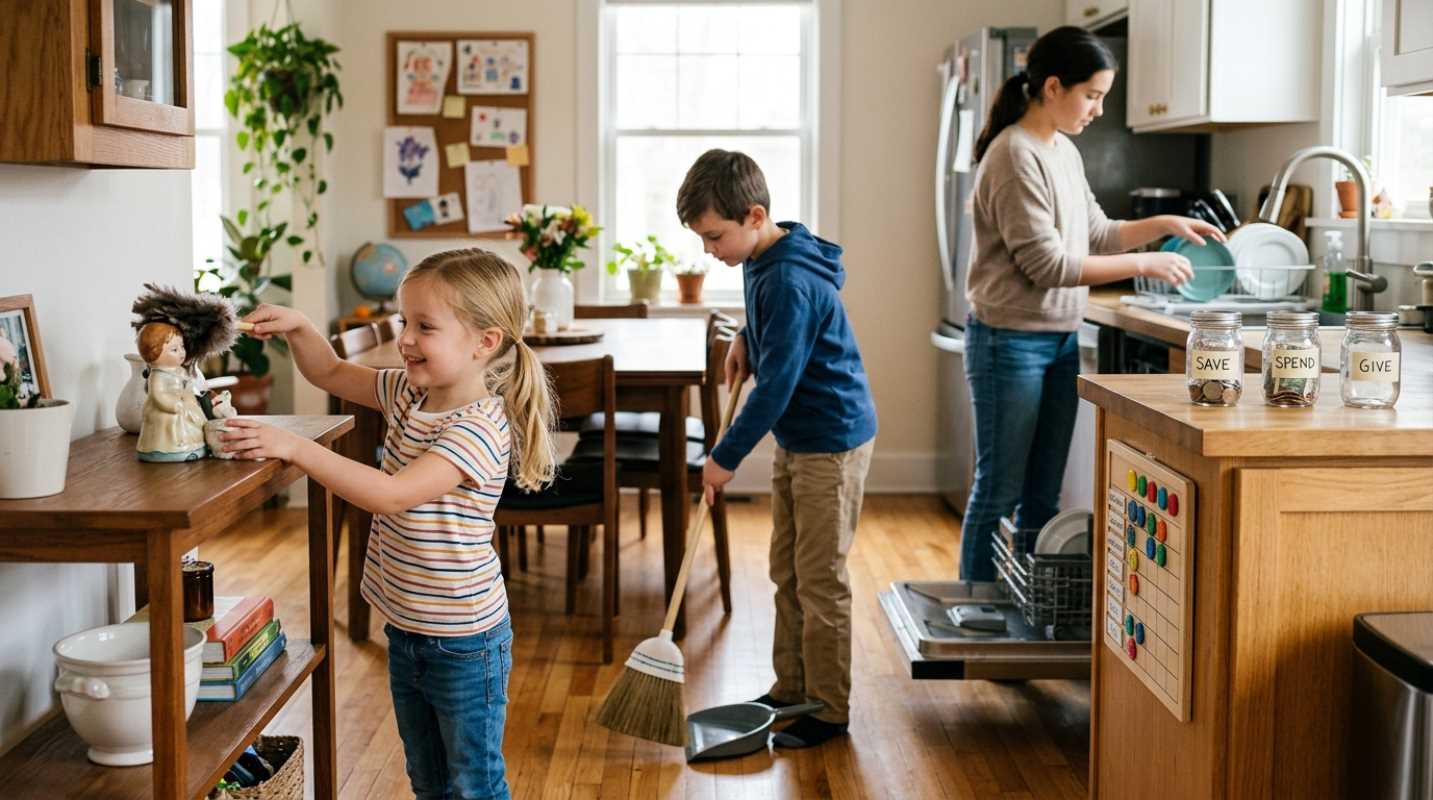
When the outside world is changing, your home needs to feel like an anchor. Predictability is the ultimate antidote to childhood anxiety. If your daily schedule is a mess, your child's emotional state will likely follow suit.
In mid-2025, child therapist S. Drake Thomas introduced a helpful framework called the 5 C's to help families handle these shaky times.⁵ You can use these five pillars to build a sense of safety
• Choice: Give your child small, age-appropriate decisions. Let them choose their new bedroom paint color or pack their own backpack.
• Collaboration: Work with your child instead of making every plan for them. Brainstorm together on how they can make new friends.
• Consistency: Keep your daily anchors steady. Maintain the exact same bedtime rituals, mealtimes, and weekend movie nights.
• Communication: Set aside a quiet, distraction-free space every day where they can talk to you.
• Connection: Treat the transition as a shared family adventure rather than something happening to them.
Small, daily rituals might seem minor, but they provide massive comfort. Even if you are living out of suitcases in a temporary apartment, reading the same bedtime story at 8:00 PM tells your child that their world is still intact.
Parenting During Transitions and Managing Your Own Emotions
Here is a hard truth: you cannot pour from an empty cup. Your child is constantly watching you to figure out how they should react to stress. If you are a ball of anxiety, they will match your energy.
This is where the psychological concept of co-regulation comes into play. Children rely on your calm nervous system to help settle theirs.¹ If you can manage your own stress, you help them manage theirs.
Think of yourself as a thermostat, not a thermometer. A thermometer just reflects the temperature of the room. If your child is screaming and angry, a thermometer parent gets screaming and angry too. A thermostat parent sets the temperature. You bring the cool, calm air into a hot situation.
You can model healthy coping mechanisms right in front of them. Talk about your own feelings in a constructive way. You might say: "I am a little nervous about my new job, but I am also excited to learn new things." This shows them that anxiety and excitement can live in the same space.
Help your child build their own internal toolbox of coping approaches.⁴ Remind them of past challenges they conquered. You can say: "Remember when you were scared to start soccer, but ended up loving it? You have the tools to handle this new challenge, too."
If you are looking for resources, books, or tools to help your child handle these big shifts, here are some of our top-rated recommendations.
Building Long Term Resilience
Most kids are incredibly resilient and will adapt to their new normal within a few weeks. But sometimes the stress of a transition is too much to carry alone. How do you know when your child needs professional help?
According to updated clinical guidelines, you should watch for warning signs that last more than a few weeks
1. Persistent sadness, withdrawal, or extreme irritability.
2. Unexplained physical symptoms like frequent headaches or stomachaches.
3. Significant changes in sleep or eating habits.
4. A sharp decline in school grades or a sudden loss of interest in their favorite hobbies.
If you notice these red flags, do not hesitate to reach out to teachers, school counselors, or a pediatric therapist. Seeking help is becoming the norm. In fact, the U.S. Bureau of Labor Statistics projects a 12% to 13% growth in employment for child and school psychologists through 2032, showing how much our society now prioritizes youth mental health.
You do not have to do this alone. By partnering with professionals and staying patient, you can help your child turn a scary transition into a powerful opportunity for personal growth.
Sources:
1. unchealthcare.org
https://healthtalk.unchealthcare.org/5-tips-for-supporting-your-child-through-a-big-change/
2. ourkidthings.com
https://www.ourkidthings.com/moving-with-kids-statistics-2024-trends-and-insights-for-families/
3. census.gov
https://www.census.gov/library/stories/2026/01/divorce-affects-children.html
4. psychologytoday.com
https://www.psychologytoday.com/us/blog/scientific-mommy/202601/helping-children-deal-with-the-one-constant-in-life-change
5. k12.com
https://insightaz.k12.com/blog/guidance-support/managing-change-a-parents-guide-to-navigating-lifes-transitions/
*This article on GoodWilliam is for informational and educational purposes only. Readers are encouraged to consult qualified professionals and verify details with official sources before making decisions. This content does not constitute professional advice.*