Have you ever found yourself staring at a pile of laundry at 10:00 PM, wondering how another day slipped through your fingers? If your chest feels tight just looking at your weekly schedule, you are in good company. Modern parenting in 2026 has become a pressure cooker, and the expectation to do everything perfectly is driving families to the brink of exhaustion.
Recent data shows that this overwhelm is not just in your head. A global study revealed that 84% of parents experience regular caregiving stress, and 73% frequently feel like they are falling short.¹ For parents of very young children, the pressure is even more intense, with burnout risk scores climbing to 49% for preschool parents.²
So, how do we stop surviving and start actually living? The answer does not lie in a massive lifestyle overhaul that you do not have time for anyway. Instead, it is about shifting toward intentional, simple changes that protect your peace.
Mastering Family Organization Without the Overwhelm
When your home feels chaotic, your brain feels chaotic. Organization is not about creating a picture-perfect pantry for social media. It is about clearing out the mental clutter so you can breathe easier.
The mental load of remembering every doctor appointment, permission slip, and grocery list is incredibly heavy. You can lighten this load by shifting the information out of your head and into shared systems.
• The Shared Digital Calendar: Keep everyone on the same page by syncing schedules on a single, shared app. This make sures both partners can see the week ahead without needing to constantly ask who is driving which kid where.
• The Launchpad Area: Set up a designated spot near the door for school bags, shoes, and keys. This simple physical boundary prevents the frantic, last-minute search for a missing shoe when you are already five minutes late.
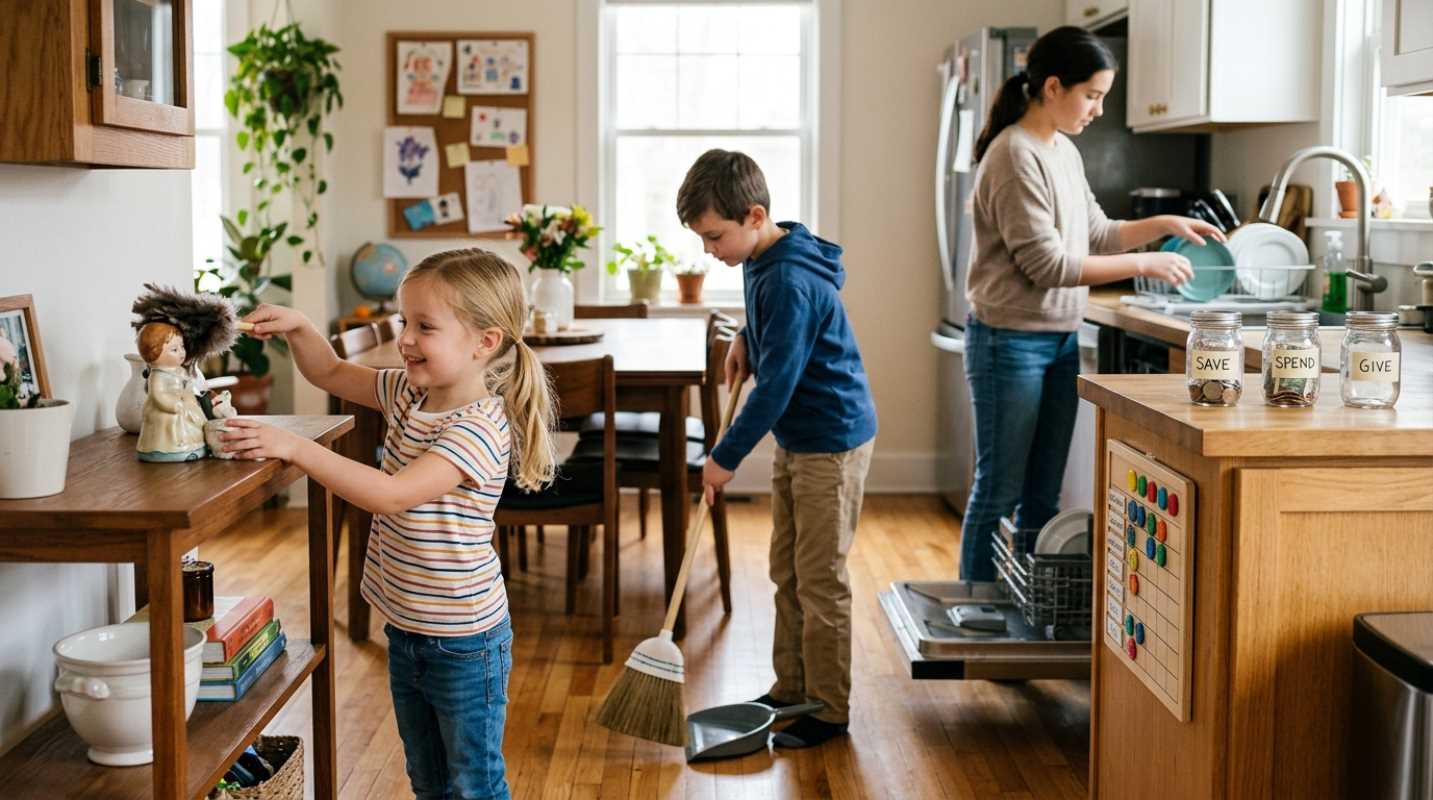
• Shared Family Responsibilities: Divide age-appropriate tasks among all family members. Even young children can be responsible for putting their own shoes in the launchpad or placing dirty clothes in the hamper.
The Life-Changing Magic of Consistent Daily Routines
Predictability is a natural stress-reliever. When children know what to expect, their anxiety levels drop, which directly translates to fewer behavioral battles for you. This predictability is especially important during the school year, when 40% of parents report experiencing significantly higher daily stress.³
Creating consistent morning and evening rituals helps automate your day. When actions become habits, you save valuable mental energy because you no longer have to make decisions about what comes next.
• Morning and Evening Anchors: Establish simple, repeatable sequences for waking up and winding down. This might look like breakfast, teeth brushing, and backpack checking in the exact same order every morning.
• Buffer Time: Add fifteen minutes of extra padding to your travel estimates. If you think it takes twenty minutes to get to soccer practice, give yourself thirty-five, because someone will inevitably need the bathroom right as you walk out the door.
• Decision Fatigue Reducers: Choose school outfits, pack lunchboxes, and sign permission slips the night before. This keeps your morning brain from having to process complex tasks before you have even finished your coffee.
Prioritizing Work-Life Balance in a Remote-Work World
The rise of hybrid and remote work has made it incredibly difficult to know when the workday ends and family life begins. When your office is also your living room, the temptation to check emails at the dinner table is hard to resist.
Workplace experts note that this blurring of boundaries is a primary driver of chronic exhaustion. To combat this, you need to establish physical and mental transitions. Think of these as symbolic rooms that you enter and leave.
If you work from home, designate a specific workspace and physically close the door or pack up your laptop when the workday ends. If you do not have a separate room, even a specific chair can work.
Create a transition ritual to replace a physical commute. This could be a ten-minute walk around the block, changing into comfortable clothes, or doing a simple breathing exercise. This ritual signals to your brain that you are shifting from employee mode to parent mode, helping you stay present with your kids.
Small Rituals for Connection and Decompression
You do not need to schedule a weekend getaway or a long spa day to lower your stress hormones. Busy parents rarely have time for elaborate self-care rituals, but you can easily integrate micro-moments of care into your existing day.
Try habit stacking by pairing a moment of awareness with an existing habit. Like, you can practice taking three deep, slow breaths while waiting for your morning coffee to brew or while sitting at a red light.
Connection with your children does not require hours of free time either. Just ten minutes of undivided, screen-free attention daily can completely change the dynamic in your home. Let your child choose the activity, put your phone in another room, and simply follow their lead.
Finally, protect your family time by learning to say no. We often overschedule our children with extracurricular activities because we worry they will fall behind. But a packed schedule that leaves everyone exhausted is rarely worth the trade-off. It is entirely acceptable to limit activities to one per child per season to keep your weekends restful.
Reclaiming Family Joy One Step at a Time
Reducing family stress is a gradual process rather than a sudden destination. There is no perfect family, and trying to create one will only make you more anxious.
When plans fall through or dinner gets burned, try to react with humor and flexibility. Modeling this kind of resilience teaches your children how to handle life's inevitable bumps far better than a perfect, stress-free environment ever could.
Do not try to implement every approach in this article at once. Instead, pick just one small change to start today, like setting up a launchpad area or committing to ten minutes of undivided connection. By taking small, deliberate steps, you can quiet the daily chaos and rediscover the simple joy of being together.
Sources:
1. The Baby Show Global Research
https://www.thebabyshow.co.uk/news/independent-global-research-reveals-8-10-parents-experience-stress-daily
2. Cleo Family Health Index
https://hicleo.com/resource/burnout-hits-a-record-high-why-parents-of-young-children-are-now-the-most-at-risk/
3. Kids Mental Health Foundation Parental Burnout Survey
https://www.kidsmentalhealthfoundation.org/about/media-center/press-releases/parental-burnout-during-school-year-survey
*This article on goodwilliam.com is for informational and educational purposes only. Readers are encouraged to consult qualified professionals and verify details with official sources before making decisions. This content does not constitute professional advice.*