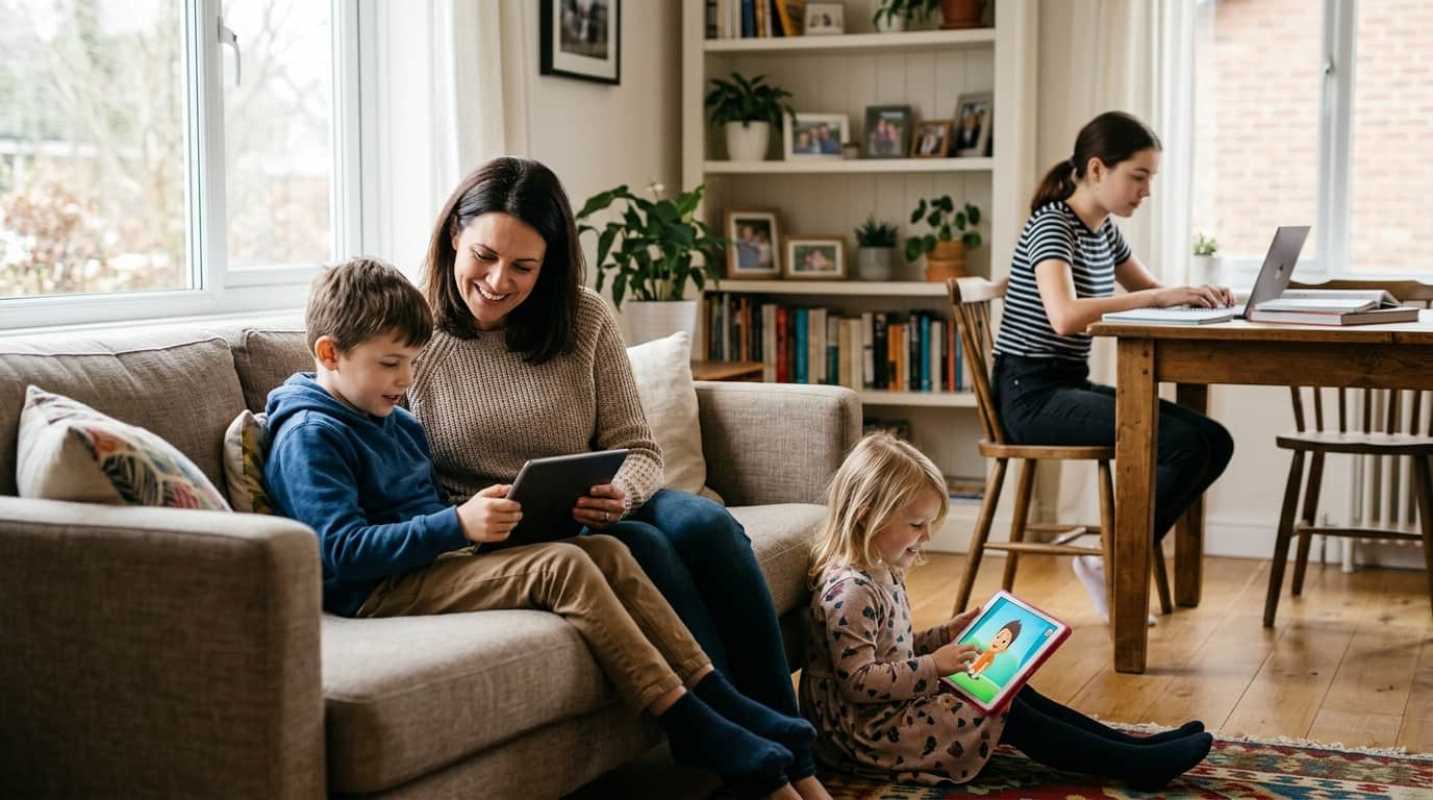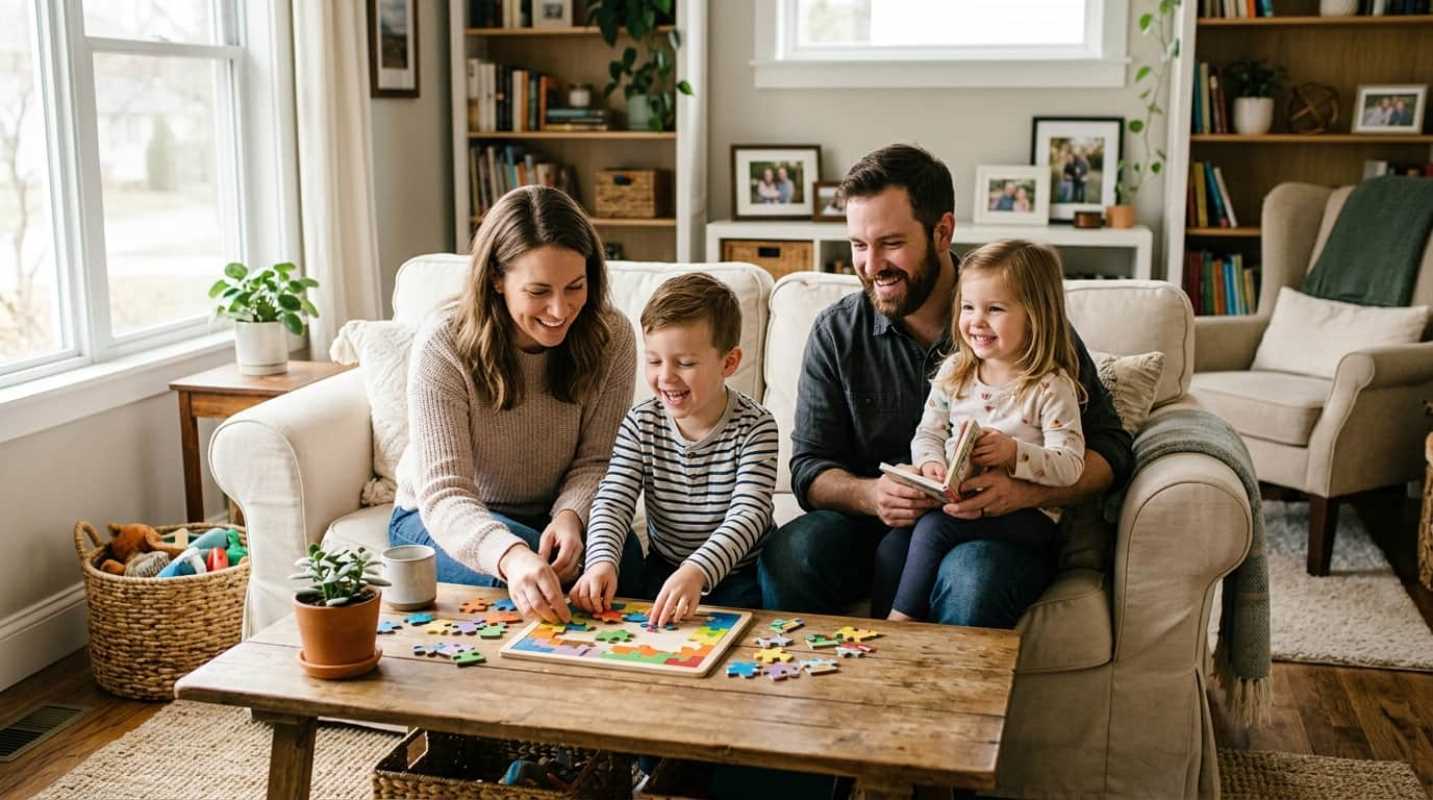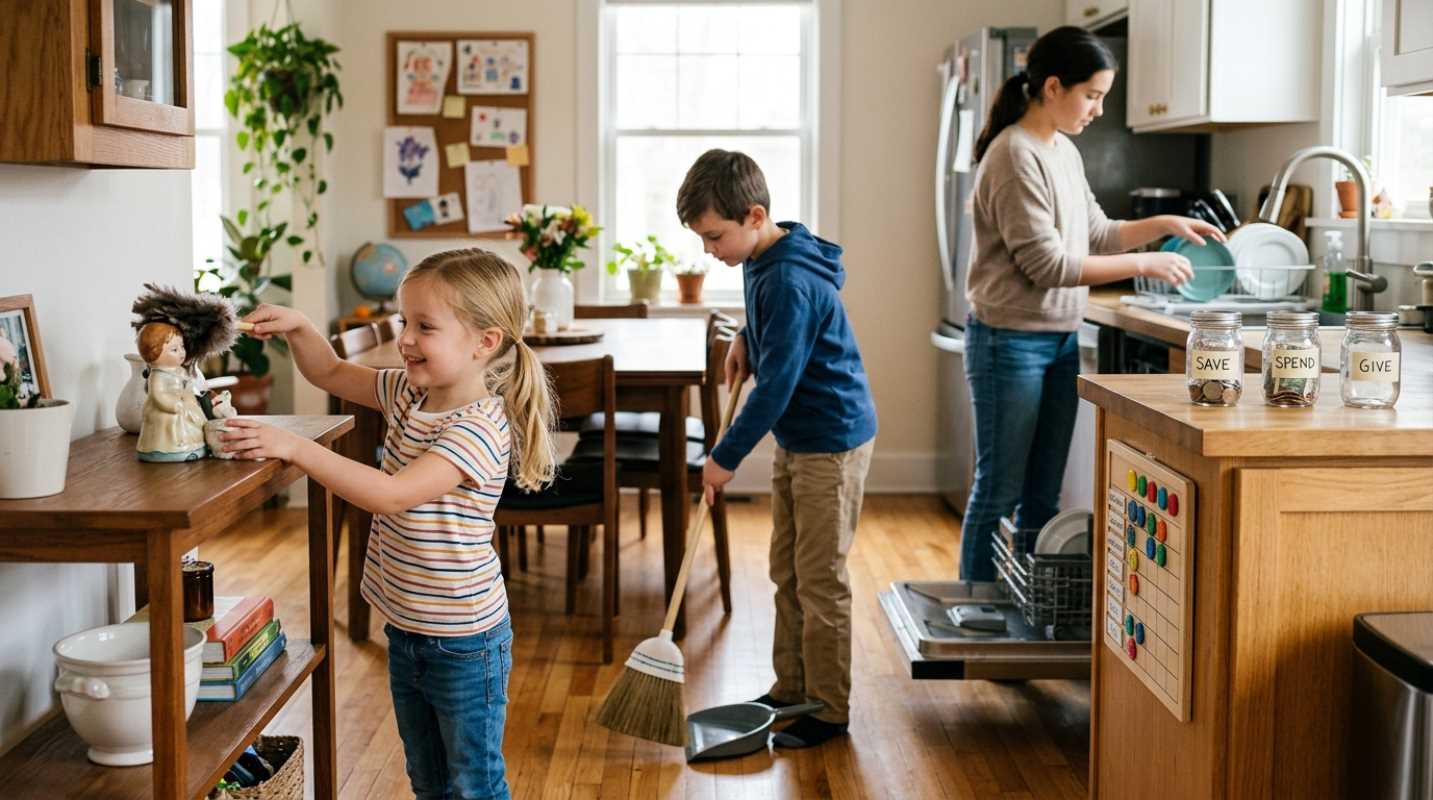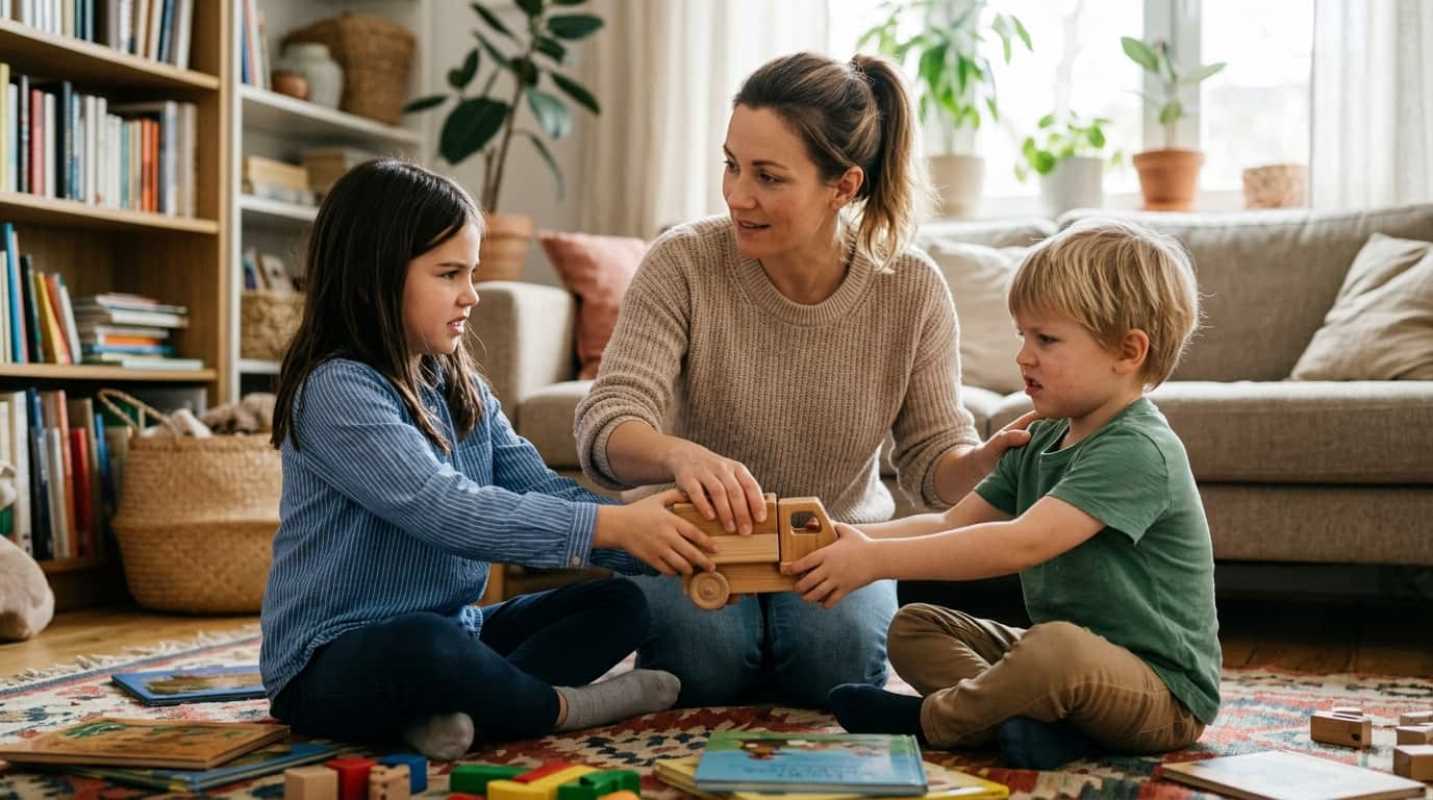
You just sat down with a warm cup of coffee, and suddenly a scream echoes from the playroom. Someone stole a LEGO brick. Someone breathed too loudly. Someone looked at someone else the wrong way. If your home constantly feels like a courtroom where you are the overworked judge, you are not alone. Roughly 80% of children in Western nations grow up with at least one sibling.¹ For kids between the ages of 4 and 8, research shows they engage in up to 8 conflicts per hour.¹ That is a dispute every seven to eight minutes.
It is easy to feel like you are failing when your kids bicker constantly. But sibling rivalry is a completely normal developmental stage. You do not need to panic every time voices get raised.
Instead of treating every argument like a fire you must extinguish, try looking at these moments as daily practice sessions. Every squabble is a chance for your kids to build negotiation, empathy, and emotional regulation skills. Your long-term goal is not to eliminate fighting entirely, but to guide your children toward building a strong, lasting bond.
Understanding Why Kids Fight
Why do siblings clash so fiercely over trivial things? At its core, sibling rivalry comes down to competition for key parental resources. Kids naturally want your time, affection, approval, and focus.
Children constantly measure themselves against their brothers and sisters to calibrate their own self-worth. When a child sees a sibling getting a bigger slice of cake, a later bedtime, or extra attention, their brain interprets that as a direct threat to their standing in the family.
But not all conflict carries the same weight. Mild squabbles are actually useful because they teach kids how to stand up for themselves and resolve differences. Severe sibling conflict is a completely different story. Unchecked sibling bullying can double the risk of depression and self-harm in early adulthood, matching the negative outcomes seen in severe peer bullying.²
The spark behind most daily fights usually involves a perception of unfairness. When a child screams, "That's not fair!", they are rarely asking for a mathematical calculation of resources. Clinical psychologist Dr. Laura Markham points out that this phrase is usually a child's way of expressing an unmet emotional need, such as feeling left out, tired, or overwhelmed.
Practical Conflict Resolution Techniques
When a fight breaks out, many parents automatically play the role of a police officer. They rush into the room, investigate who started it, assign blame, and hand down a punishment.
A better approach is to act as a conflict coach. Your job is not to figure out who is guilty or impose an adult solution. Your goal is to keep everyone safe and help the kids design a solution themselves.
Here is a five-step mediation framework you can use during the next living room battle:
1. Maintain parental self-regulation: Approach the fight using a slow, calm voice. Children cannot access their logical reasoning skills while their nervous systems are in a high-arousal fight-or-flight state.
2. Institute a cool-down period: Separate physical bodies safely without turning it into a punishment. Frame it as a necessary pause so everyone can take a breath and calm down.
3. Avoid assigning fixed roles: Labeling one child as the victim and the other as the troublemaker creates deep resentment. Dr. Jon Caspi warns that tagging older children with phrases like "you should know better" or calling younger kids "the instigator" breeds long-term anger and worsens aggressive behavior.³
4. Use "I" statements for active listening: Have each child explain what happened without interruption. Encourage them to say, "I felt angry when you took my truck," instead of shouting personal insults.
5. Prompt child-led solutions: Shift the burden of problem-solving back to your kids. Ask open questions like, "We have one tablet and two people who want to use it. What can we do so both of you feel treated right?"
Creating an Environment of Cooperation
If you want fewer fights, you need to change the daily environment in your home. Equal treatment sounds wonderful on paper, but giving children identical items or time is counterproductive. Kids are different ages, have different personalities, and possess distinct needs.
Focus on equity rather than strict equality. Explain your decisions based on individual requirements so your children understand the logic behind your parenting choices.
Like, if your younger child complains that their older sister gets to stay up later, skip the long debate. Simply say, "Her body requires less sleep at age ten. When you are ten, you will get the exact same bedtime."
You can also reduce competitive tension by creating regular opportunities for your kids to work together toward shared goals. Try integrating these three practical habits into your weekly household routine:
• Dedicated individual time: Spend at least 10 to 15 minutes of uninterrupted one-on-one time with each child daily. Let them choose the activity so they feel valued for who they are.
• Praise natural teamwork: Point out warm interactions when they happen organically. Say something like, "I noticed how you helped your brother tie his shoes earlier. That was very thoughtful."
• Protect personal property: Allow each child to have a small container or shelf for special items that they never have to share with their siblings.
Building a Lifelong Foundation
Sibling relationships are statistically the longest-lasting relationships most people will experience in their lifetime. The way your children learn to handle conflict, manage jealousy, and communicate their needs today forms the blueprint for their future adult relationships.
Be patient with yourself and your kids as you implement these tools. Shifting family dynamics takes consistency, repetition, and plenty of deep breaths on your part. Fights will still happen, and that is completely fine.
Your primary role is to serve as a calm emotional coach in the middle of the noise. By staying neutral, validating their underlying feelings, and teaching practical negotiation skills, you give your children the tools they need to handle conflict for the rest of their lives.
Sources:
1. Sibling Conflict Research
https://news.northeastern.edu/2024/12/18/sibling-conflict-research/
2. Feature Sibling Relationships
https://www.apa.org/monitor/2022/03/feature-sibling-relationships
3. Raising Loving Siblings
https://www.montclair.edu/newscenter/2024/12/13/raising-loving-siblings-expert-parenting-tips-to-stop-fighting-and-build-lifelong-bonds/
*This article on GoodWilliam is for informational and educational purposes only. Readers are encouraged to consult qualified professionals and verify details with official sources before making decisions. This content does not constitute professional advice.*