Your toddler stares at a single floret of broccoli as if you just served them toxic waste. They cross their arms, turn their head, and lock their jaw shut. Have you been there? It is one of the most frustrating, exhausting moments in parenting. But here is something every parent needs to hear: food refusal is almost never actually about the broccoli.
At its core, refusing food is your child's way of testing their independence. Around age two, kids go through a massive developmental leap in autonomy. Coincidentally, this is also when food neophobia, or the fear of new foods, reaches its natural peak.¹ Add in the fact that a child's biological growth rate slows down dramatically after their first year, and their natural appetite drops too.
Parents often panic when this happens. Studies show that between 20% and 50% of toddlers are categorized by their parents as picky eaters.¹ We worry about nutrient deficiencies, like missing out on iron, zinc, or fiber. So what do we do? We slip into negotiation mode. We try the old clean plate club rule or offer bargains like "just two more bites."
Unfortunately, parental anxiety fuels these exact bargaining approaches. When we turn dinner into a courtroom negotiation, kids sense our tension. Pressuring a child to swallow a bite actually triggers their stress response, reducing their appetite even further and turning your dining table into a war zone.
Leading by Example and Modeling Healthy Behavior
Kids are perceptive little observers. They will always mirror your actual relationship with food long before they listen to your lecture about vegetables. If you constantly skip meals, talk negatively about your body, or pick at a bland salad while looking miserable, your kids notice that energy immediately.
So how do you fix this? Make healthy eating visible, normal, and genuinely enjoyable in your daily routine. Fill your own plate with colorful, real foods like avocados, crisp veggies, full-fat yogurt, and high-quality proteins. Eat with genuine enthusiasm. When your kids see you happily eating a variety of foods without making a huge drama about it, their brain registers those foods as safe and desirable.
Shared family meals are a total game-changer here. Sitting down together at the table, free from screens or high-distraction environments, creates a relaxed setting. Research shows that regular family meals are one of the strongest predictors of long-term healthy eating habits in children. It gives them a daily blueprint for how adults interact with food in a peaceful way.
The Division of Responsibility and Who Does What
If you want to end mealtime battles forever, you need a clear boundary line. Pediatric dietitians and feeding therapists swear by Ellyn Satter's Division of Responsibility in Feeding.² This framework removes the guesswork and takes the heavy emotional burden right off your shoulders.
The concept splits mealtime roles cleanly between parent and child:
• The parent's responsibility: You decide what food is served, when it is served, and where it is served. That means providing balanced, real foods on a predictable schedule (usually every 2.5 to 3 hours) at a designated table free from televisions or tablets.
• The child's responsibility: Your child decides whether to eat the food you provided and how much of it to consume.
That is it. Once you set the plate down, your job is officially done. If your child chooses to take two bites of bread and ignore the rest, that is entirely their choice.
You also have to drop the expectation that every single meal needs to be perfectly balanced on its own. Look at your child's nutritional intake over a whole week instead of fretting over a single Tuesday evening sitting. Energy levels and hunger naturally ebb and flow in growing kids.
Practical Tactics for Avoiding Food-Related Conflict
Shifting your mindset is half the battle, but you also need practical tactics when you are standing in the kitchen. Here are proven approaches to keep meals calm and conflict-free.
• Use neutral food language: Stop labeling items as good, bad, healthy, or junk. When you label a cookie as a bad treat, it makes it super desirable. Describe food using neutral sensory words instead. Talk about how crunchy, smooth, sweet, warm, or green an item is.
• Remember the 15 exposures rule: A child often needs 12 to 15 low-pressure touches before they feel safe enough to eat a new food. An exposure does not mean swallowing a bite. Watching you prepare it, touching it, smelling it, or letting a tiny piece sit on their plate all count as progress.
• Always include safe foods: Never serve a meal made entirely of unfamiliar or previously rejected items. Always put one or two reliable safe foods on the plate, like bread, cheese, or apple slices, so your child knows they will not go hungry.
• Use the No Thank You plate: Give your child a small secondary dish designated for unwanted items.³ If they do not want something on their main plate, teach them to calmly move it to the No Thank You plate rather than throwing it across the room.
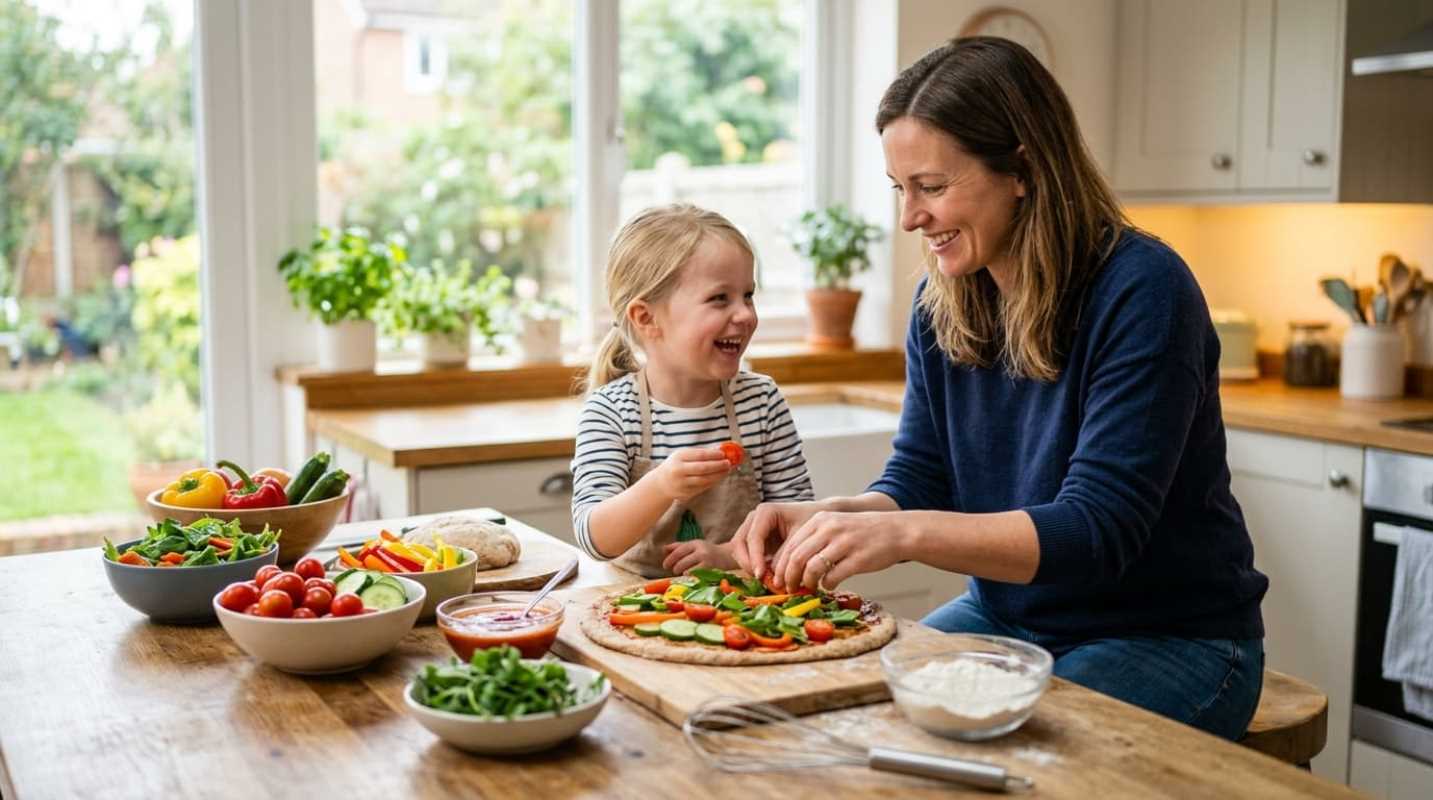
• Involve kids in prep: Children are far more likely to try foods they helped select or cook. Let them wash vegetables, stir ingredients, or pick between two green veggies at the grocery store to give them buy-in.
• Stop bribing with sweet treats: Saying "eat your peas, and you can have ice cream" instantly teaches your child that peas are a chore and ice cream is the ultimate reward. Keep dessert independent of meal performance.
Building a Positive Relationship with Food for the Long Haul
Looking for practical tools to make family mealtimes run smoother? From ergonomic toddler utensils to meal planning aids, here are our favorite items to help take the pressure off dinner.
At the end of the day, teaching healthy habits is a long game. The ultimate goal is raising an intuitive eater who listens to their body's internal hunger and fullness cues. When you force a child to clean their plate, you teach them to ignore those internal signals, which can lead to eating struggles down the road.
Picky eating is a totally normal developmental phase for most kids. Treat it with calm consistency rather than frustration. But keep an eye out for extreme red flags. If your child eats fewer than 20 total foods, consistently gags at sensory textures, or drops off their growth curve, talk to your pediatrician or a feeding therapist about potential challenges like Avoidant Restrictive Food Intake Disorder.
For typical picky phases, success is not measured by whether your child ate three florets of broccoli tonight. Success is measured by creating a calm table where food is enjoyed without fear, control battles, or stress. Trust the process, hold your boundaries, and let your child take the lead on their own appetite.
Sources:
1. National Institutes of Health
https://pmc.ncbi.nlm.nih.gov/articles/PMC4291945/
2. Ellyn Satter Institute
https://www.ellynsatterinstitute.org/wp-content/uploads/2015/08/ELLYN-SATTER%E2%80%99S-DIVISION-OF-RESPONSIBILITY-IN-FEEDING.pdf
3. FOCUS Therapy
https://focusflorida.com/occupational-therapy/the-no-thank-you-plate-a-simple-feeding-approach-to-reduce-mealtime-power-struggles/
*This article on GoodWilliam is for informational and educational purposes only. Readers are encouraged to consult qualified professionals and verify details with official sources before making decisions. This content does not constitute professional advice.*